
Written by Michael Tillmann in An Interesting Case

Written by Michael Tillmann in An Interesting Case
This case is a fascinating chapter from Canadian history—the “Women Are Persons” Case, more formally known as the Persons Case. In legal circles, it is cited as Edwards v. Canada (Attorney General). This story is about the fight for women’s recognition and equality under the law, illustrating the interplay between politics, law, and society over time.
July 12, 2024 · 12 min read
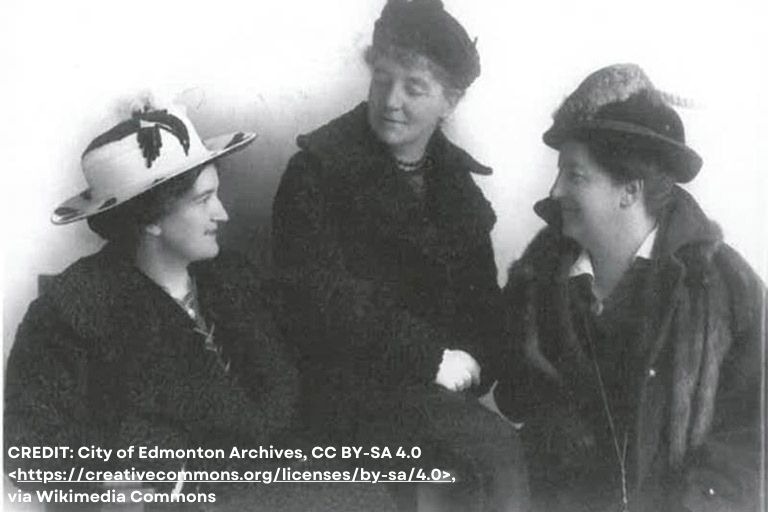
Today, we delve into a fascinating chapter from Canadian history—the “Women Are Persons” Case, more formally known as the Persons Case. In legal circles, it is cited as Edwards v. Canada (Attorney General). This story is about the fight for women’s recognition and equality under the law, illustrating the interplay between politics, law, and society over time.
The case revolves around constitutional law, specifically the interpretation of the British North America Act of 1867, which established Canada as a country. This act, renamed the Constitution Act in 1982, is Canada’s constitution.
The case was decided in 1929 by the Judicial Committee of the Privy Council of the United Kingdom, but the events leading to this decision began over a decade earlier.
In 1916, Canada (then known as the Dominion of Canada) was still part of the British Empire. It had autonomy to govern itself internally but was still subject to the control of the Empire in matters of foreign affairs and war. It would not be until 1931, with the British Parliament enacting the Statute of Westminster, that Canada would gain complete legal control over its foreign affairs and defence. In 1916, Canada was midway through World War I, contributing hundreds of thousands of soldiers to fight for the Empire.
In that same year, Emily Murphy began serving as a police magistrate in Edmonton, Alberta. She was appointed by Alberta’s government to handle cases involving women and juveniles, becoming the first female judge in Canada and the British Empire.
At that time, women’s roles were heavily constrained by both social norms and law. They were barred from voting in most of Canada and faced many other legal barriers. While progress was being made, it was inconsistent and took decades. For instance, although many women gained the right to vote in federal elections through legal amendments in 1917 and 1918, Quebec didn’t allow women to vote in provincial elections until 1940, and federal and provincial voting rights for women from certain ethnic groups were only fully recognized between 1948 and 1960.
Interestingly, women had only been allowed to become lawyers within the previous two decades. Consequently, Emily Murphy’s appointment as a judge in 1916 garnered significant attention, not all positive.
An anecdote from Emily Murphy’s first day in office illustrates the resistance she faced. On that day in 1916, she reportedly had a lawyer named Harry Robertson appear before her, defending a client. He argued that under common law, women couldn’t hold public office as they weren’t considered “persons.” He claimed this made Emily Murphy’s appointment invalid. Magistrate Murphy dismissed his argument and ruled against his client.
After the case, Emily Murphy consulted with her brother, a judge in Ontario. She learned there was a legal foundation to Robertson’s claim: under the English common law system prevailing in Canada and throughout the British Empire, legal precedent did stipulate that women could not hold public office. However, times were beginning to change, and some governments in the Empire—including the provincial government of Alberta—had decided to look past this legal tradition and appoint women to public office regardless.
The argument that women were not within the legal definition of “persons” would keep coming up. Shortly after Emily Murphy’s appointment, another woman named Alice Jamieson was appointed as a magistrate in Alberta. A lawyer named Mackinley Cameron, representing a client in her court, made the same claim Robertson had before. He argued that Jamieson was “incompetent” to hold the office of magistrate and could not try his client because women were not persons under the law. Like Murphy, Jamieson disregarded this assertion and proceeded to try and convict his client.
However, unlike Robertson, Cameron did not drop his argument. He appealed his client’s conviction, arguing the verdict was invalid because the judge was not competent to hold office. The appeal was heard in 1917 by Justice David Scott of the Alberta Supreme Court, who, despite his doubts about a woman serving as a magistrate, upheld Jamieson’s decision.
The issue arose again in 1921 when Alberta created an appellate division to its Supreme Court. The statute creating the appellate division allowed past decisions to be appealed, and Cameron took this opportunity to challenge his client’s 1917 conviction once more. Justice Charles Allen Stuart of the Alberta Supreme Court’s new appellate division upheld women’s ability to hold office, dismissing Cameron’s arguments more forcefully than Justice Scott had. Stuart noted that the common law could evolve to reflect new societal conditions, such as the changing status of women. He stated, “If the common law rests on common sense, then there can be no bar to women in the public life of Alberta.”
Around this time, prominent Canadian women advocating for gender equality began to focus on the Canadian Parliament. The Parliament had two houses: the elected House of Commons and the appointed Senate, modeled on the British House of Lords. With recent amendments allowing women to vote and run in federal elections, the first woman was elected to the House of Commons in 1921. Now, there was much discussion about appointing the first woman to the Senate.
The Montreal Women’s Club proposed Emily Murphy as Canada’s first female senator. Not only was she Canada’s first female judge, but she was also a respected journalist and writer. And her recent book, “The Black Candle,” about the narcotics trade in Canada, had gained significant attention.
Despite this, the federal government claimed that appointing a woman to the Senate would violate section 24 of the British North America Act, which specified that a senator had to be a qualified “person.” The government argued that women were not included in this definition.
Years went by until, in 1927, advocates for a woman in the Senate decided to bypass the politicians and take the question of whether women were legally “persons” under the British North America Act to the courts. At that time, there was a section in the Supreme Court Act that allowed a group of five or more citizens to submit a petition asking for an advisory opinion from the Supreme Court of Canada on any provision of the British North America Act. Therefore, it was decided that a group of five prominent Canadian women ought to make use of this legal mechanism to put the federal government’s interpretation of the Act to the test and get an answer from the country’s highest court on whether women were qualified to hold high office or not.
To that end, Emily Murphy and four other prominent advocates for women’s rights gathered and put pen to paper in the summer of 1927. The four others, in addition to Murphy, were Henrietta Muir Edwards, Nellie L. McClung, Louise C. McKinney, and Irene Parlby. Together they would eventually come to be known in Canadian history as the Famous Five.
These five women drafted a petition asking for an interpretation of the meaning of the term “person” in Section 24 of the British North America Act and sent it to the federal government in Ottawa. The petition wound its way through the various government channels and eventually, in March of 1928, the question came up for a hearing before the Supreme Court of Canada.
Presenting the case for the five women, and arguing that women were legally persons and eligible for membership in the Senate, was Newton W. Rowell, a nationally renowned lawyer from Toronto, as well as a well-connected politician who had held high office. He empathized with the cause of advancing women’s place in society and shared common ground with the five on other points as well; for example, both he and Nellie McClung were vocal opponents of alcohol.
Arguing the federal government’s case in opposition to Rowell was Lucien Cannon, Solicitor General of Canada. He continued to proclaim that, when the British North America Act had been enacted in 1867, the intention of the drafters had been to exclude women from the meaning of the word “person.” The understanding of the word at the time was that it applied only to men, and it was not open to be changed now, unless the entire Act was amended; and that could only be done by the Parliament of the United Kingdom since it was they who had enacted it in the first place.
Additionally, the provincial government of Quebec had been granted intervenor status in the hearing and had sent their own representative to express their view. Eugene Lafleur, Deputy Minister of Justice for Quebec, joined the federal government in declaring that it was clear that women could not be in the Senate. At one point, he asked, “How could women who had entered married life, and thereby owed obedience to their husbands, exercise the powers of Senator?”
After receiving the submissions and hearing the arguments from the various legal counsel, the justices of the Supreme Court retired to consider their decision. Weeks went by. Then, on April 20th, 1928, the court announced its judgment. It had found, by unanimous agreement of all six justices, that women were not “persons” within the meaning of Section 24 of the British North America Act and therefore could not be appointed to the Senate.
This was a disheartening setback to the Famous Five, but they were not yet defeated due to an interesting feature of the Canadian legal system that existed at the time. Since Canada was still a part of the British Empire, the Supreme Court of Canada was not the highest court in the Canadian legal system. That honour rested with a body known as the Judicial Committee of the Privy Council located in faraway London, the capital of the British Empire.
Technically speaking, under the British system of justice, the monarch was the fount of justice and the highest judicial authority, and so they were the final possible stop for all appeals in the Empire. However, the Judicial Committee was a body of lawyers and judges who served to advise the British monarch on legal matters. Therefore, the committee would receive the appeals on the monarch’s behalf and consider them, and then advise the sovereign on what they believed the correct decision was; and by tradition and custom the monarch would always follow this advice.
The Famous Five and their legal counsel would take their case to this final arbiter of justice in the Canadian and British legal systems, hoping that it might choose to reverse the loss suffered before the Supreme Court of Canada.
Once the appeal was filed with the Judicial Committee in London, the five women and their counsel had to wait for some months before their case was heard. The committee was dealing with eight appeals from Canada and theirs was eighth in line. Finally, in July 1929, their case’s allotted time came up and, although waiting might have been frustrating for the Famous Five, it might have just done their case some good.
As fate may have it, there had been a change in government in the United Kingdom. The Labour Party had won the latest elections and formed a new administration, and the Labour Prime Minister had just appointed Viscount John Sankey as the new Chief Justice to preside over the Judicial Committee. Sankey was a progressively minded legal thinker and former politician and was just the sort of person who would look favourably on advancing the status of women.
There were several days where the opposing legal counsel presented their cases once again, this time before the Judicial Committee instead of the Supreme Court of Canada. After they were finished, the board of five judges, headed by Viscount Sankey, retired to their chambers to discuss and deliberate.
It would then take months before the committee announced its decision, but when it was finally proclaimed on October 18th, 1929, it was welcome news to the Famous Five. The Judicial Committee had agreed that the Supreme Court’s decision was incorrect, and that the word “person” as found in the British North America Act did include women. There was no legal barrier to women serving in the Senate.
The judgment of the committee was delivered eloquently by Viscount Sankey, who rejected the Supreme Court’s finding that it was bound by the historical understanding of the word “person” that had prevailed during the time when the Act was written. He dismissed the idea that new interpretations of the law could not be developed over time to meet the changing needs of changing times, and declared that the British North America Act was a living tree that could, subject to certain limits, grow into whatever the nation of Canada needed it to be.
In the written judgment for the committee, Sankey wrote: “The exclusion of women from all public office is a relic of days more barbarous than ours.” Later, he also wrote: “The word ‘person’ may include members of both sexes, and to those who ask why the word should include females, the obvious answer is why should it not.”
The Famous Five had won and a legal pathway had been cleared for women to enter the Senate of Canada. And that would occur shortly thereafter, with Cairine Wilson being sworn in as the first female senator on February 15th, 1930.
There was disappointment amongst some that the office did not go to Emily Murphy or one of the others in the Famous Five. In fact, none of them ever were appointed to the upper chamber of Canada’s Parliament. Regardless, they had achieved a legal victory that would open the door to higher office for countless women in ensuing generations and they have been commemorated in a number of ways. There are statues of them on Parliament Hill in Ottawa, Canada, they were depicted on the Canadian $50 bill for a time and October 18th has been named Persons Day in their honour.
Today, looking back, some are more critical of the legacy of the Famous Five. It has been noted there were some amongst their number who had objectionable views on race and immigration. As well, it has been pointed out that several of them were in favour of eugenics and forced sterilization.
These things are all true and the problematic aspects of these five women should not be overlooked, but history and figures in history are complicated. We must acknowledge the good done by persons along with the bad. As was stated by Dr. Rebecca Sullivan of the University of Calgary when interviewed by CBC for a story on the Famous Five, “We have to be mindful. Our histories don’t have to be 100 per cent celebratory any more than they have to be 100 per cent critical. Our histories are complicated.”
SOURCES:
Alberta Champions Society in Recognition of Community Enrichment. (n.d.). Alice Jane Jukes Jamieson (1860 to 1949). Alberta Champions. Retrieved June 16, 2024 from https://albertachampions.org/Champions/jamieson-alice-jane-jukes-1860-1949/
Bell, D. (2019, October 18). ‘Our histories are complicated’: Famous Five fought a good but imperfect fight. CBC News. https://www.cbc.ca/news/canada/calgary/famous-five-fought-good-imperfect-fight-1.5325290
Canadian Broadcasting Corporation. (2018, June 21). The Famous Five and the ‘persons’ ruling of 1929. CBC Archives. https://www.cbc.ca/archives/the-famous-five-and-the-persons-ruling-of-1929-1.4669584
Cashman, T. (2014, July). The Persons Case in 65 Minutes Preceded by the Persons Case in 200 Words [Presentation]. Canada History Week July 2014 at the Provincial Archives of Alberta. https://provincialarchives.alberta.ca/sites/default/files/2020-05/The%20Persons%20Case%20by%20Tony%20Cashman.pdf
Collin, S. (2022, August 24). Canadian Women in the Legal Profession: From Non-‘Persons’ to Chief Justices. Best Lawyers. https://www.bestlawyers.com/article/canadian-women-legal-profession/4027
CPAC. (2014, March 17). Did You Know? – The Famous Five and the Persons Case [Video]. YouTube. https://www.youtube.com/watch?v=if_pyx5dm9Y
de Bruin, T. & McIntosh, A. (2020, November 10). Agnes Macphail. In The Canadian Encyclopedia. (Original work published April 1, 2008). Retrieved June 16, 2024 from https://www.thecanadianencyclopedia.ca/en/article/agnes-macphail
de Bruin, T., Cruickshank D.A. & McIntosh, A. (2020, November 6). Persons Case. In The Canadian Encyclopedia. (Original work published February 7, 2006). Retrieved June 16, 2024 from https://www.thecanadianencyclopedia.ca/en/article/persons-case
Edwards v. Canada (Attorney General), 1929 CanLII 438 (UK JCPC). https://canlii.ca/t/gbvs4
Elections Canada. (n.d.a). First Nations Peoples and the Right to Vote Case Study. Elections and Democracy! Retrieved June 9, 2024 from https://electionsanddemocracy.ca/voting-rights-through-time-0/first-nations-and-right-vote-case-study.
Elections Canada. (n.d.b). Inuit and the Right to Vote Case Study. Elections and Democracy! Retrieved June 9, 2024 from https://electionsanddemocracy.ca/voting-rights-through-time-0/inuit-and-right-vote-case-study
Elections Canada. (n.d.c). A Brief History of Federal Voting Rights in Canada. Elections and Democracy! Retrieved June 9, 2024 from https://electionsanddemocracy.ca/voting-rights-through-time-0/brief-history-federal-voting-rights-canada
Elections Canada. (n.d.d). Japanese Canadians and the Right to Vote Case Study. Elections and Democracy! Retrieved June 9, 2024 from https://electionsanddemocracy.ca/voting-rights-through-time-0/case-study-1-japanese-canadians-and-democratic-rights
Elections Canada. (n.d.e). Women’s Right to Vote Case Study. Elections and Democracy! Retrieved June 9, 2024 from https://electionsanddemocracy.ca/voting-rights-through-time-0/case-study-2-womens-right-vote
Farr, D.M.L. & McIntosh, A. (2020, May 1). Judicial Committee of the Privy Council. In The Canadian Encyclopedia. (Original work published February 7, 2006). Retrieved June 17, 2024 from https://www.thecanadianencyclopedia.ca/en/article/judicial-committee-of-the-privy-council
Jackel, S., Cavanaugh, C., Marshall, T. & McIntosh, A. (2020, November 20). Emily Murphy. In The Canadian Encyclopedia. (Original work published April 1, 2008). Retrieved June 16, 2024 from https://www.thecanadianencyclopedia.ca/en/article/emily-murphy
Marshall, T. (2023, October 11). Persons Case. In Encyclopedia Britannica. https://www.britannica.com/event/Persons-Case
McIntosh, A., Hillmer, N. & Foot, R. (2020, April 29). Statute of Westminster, 1931. In The Canadian Encyclopedia. (Original work published February 7, 2006). Retrieved June 16, 2024 from https://www.thecanadianencyclopedia.ca/en/article/statute-of-westminster
Morton, D., de Bruin, T., Foot, R. & Gallant, D. (2023, November 30). First World War (WWI). In The Canadian Encyclopedia. (Original work published August 5, 2013). Retrieved June 16, 2024 from https://www.thecanadianencyclopedia.ca/en/article/first-world-war-wwi
Mussett, B. (n.d.) Chinese Get the Vote. British Columbia – An Untold History. Retrieved June 9, 2024 from https://bcanuntoldhistory.knowledge.ca/1940/chinese-get-the-vote
Reference re meaning of the word “Persons” in s.24 of British North America Act, 1928 CanLII 55 (SCC), [1928] SCR 276. https://canlii.ca/t/fslfx
The Constitution Act, 1867 [British North America Act, 1867], 30 & 31 Vict, c 3. https://canlii.ca/t/ldsw
Written by Michael Tillmann in An Interesting Case
This is the Case of the Scholarship Sabotaging Girlfriend or, to use its correct legal name, the case of Abramovitz v. Lee. It is a story of Eric Abramovitz, a university student and talented young musician, and his girlfriend, Jennifer Lee, a fellow student and musician, and the events that unfolded between them. It deals with promising new career opportunities, deception and betrayal and touches on the civil law of Canada relating to fraud.
June 28, 2024 · 7 min read

Today we have the Case of the Scholarship Sabotaging Girlfriend or, to use its correct legal name, the case of Abramovitz v. Lee. It is a story of Eric Abramovitz, a university student and talented young musician, and his girlfriend, Jennifer Lee, a fellow student and musician, and the events that unfolded between them. It deals with promising new career opportunities, deception and betrayal and touches on the civil law of Canada relating to fraud.
The case was decided in the Ontario Superior Court of Justice in 2018, but the events of the story occurred some 4 to 5 years earlier.
In 2013, Eric Abramovitz was a student at McGill University in the city of Montreal, Quebec. Eric was a young man in his early twenties and lifelong resident of the province of Quebec in Canada. IN early childhood, he had shown a passion and talent for music, taking up the clarinet at the age of seven years. Since that early beginning, he had practiced with some of the best music teachers in Canada and had won multiple awards. It was therefore not surprising that he had enrolled in McGill University to complete a Bachelor of Music.
In September of 2013, Eric Abramovitz met Jennifer Lee, a fellow student and musician who had moved from Ontario to attend McGill University’s Schulich School of Music. The two soon began dating and the relationship progressed quickly, so that by October of that year Eric had began spending most of his days in Jennifer’s apartment. Eric trusted Jennifer and so he would let her use his laptop and even gave her the password for his email account.
That December, Eric decided to apply for a position in the Colburn Conservatory of Music in Los Angeles, California, hoping that he could finish the last two years of his bachelor’s degree there. The Colburn Conservatory was part of the Colburn School, an extremely prestigious private performing arts academy.
Every student accepted into the conservatory would receive a full scholarship which would not only cover the full cost of tuition, room and board, but would also come with a yearly stipend of $5,000 US to cover any additional expenses that the student may incur. Even more importantly for Eric, if he was accepted for the position, he would be taught by Yehuda Gilad, a world-renowned musical talent. He was internationally recognized as one of the world’s best clarinetists and he only accepted two students every year.
As part of the application process, in February 2014, Eric and his parents flew down from Canada to Los Angeles. There Eric performed in person before a committee of judges, including Yehuda Gilad, and he was informed that the committee would tell him of their decision on his application by April.
Some time passed and, on March 27th, 2014, Mr. Gilad sent an email to Eric. In his email, Mr. Gilad informed Eric his application was successful and offered him one of the two coveted scholarship positions under his tutelage. However, unbeknownst to Eric, his girlfriend Jennifer was monitoring his email, and she intercepted this message from Mr. Gilad. What she did next would betray Eric’s trust and cause significant repercussions down the road for both him and her.
Jennifer decided that she would intercept the email from Mr. Gilad and hide it from Eric, so he would never know that he had been offered the scholarship. In fact, she went further than that. Using Eric’s email account and pretending to be him, she sent an email back to Yehuda Gilad telling him that Eric could not accept the scholarship.
She then also created a fake email account at gmail.com under the name of Yehuda Gilad and, using this false account, sent an email to Eric for him to discover later. In this false message, posing as Mr. Gilad, Jennifer told Eric that he had been denied for the scholarship but, as a consolation prize, offered him a $5,000 USD scholarship at the University of Southern California. But Jennifer knew Eric’s financial situation, and so she knew that he would not be able to accept this offer. The cost of tuition at the university was around $50,000 USD/year, and he wouldn’t be able to afford to attend with only a $5,000 scholarship.
Why did Jennifer do this? It’s hard to say for sure what goes on in the mind of another person, but later people would speculate that it was out of a desire to keep Eric from leaving her. It is speculated that, since she would not have a scholarship to go attend the conservatory in California herself, she knew that Eric going there would result in damage to their relationship, perhaps ending it.
Jennifer’s deception was successful, as Eric believed the false message she had sent, and believed he had been denied the scholarship. However, if saving the relationship had been Jennifer’s motive for the deceit, well that objective would ultimately fail, because around six months later they ended up breaking up anyways.
Over the course of the next couple of years, Eric completed his Bachelor of Music at McGill University and then ended up travelling south to attend the University of Southern California (or USC). He wanted to take a master’s degree in music there but, due to financial constraints, he was not able to do this and had to settle for the shorter and less expensive two-year graduate certificate program.
As it happened though, Mr. Yehuda Gilad was a teacher in this program at USC and so Eric ended up taking some classes that he taught. This was far less exposure to the master musician than Eric would have had if he had been a student at the Colburn Conservatory though.
When Mr. Gilad encountered Eric, he was surprised to see him, and he approached him to ask why Eric had refused the scholarship that had been offered earlier. Eric was perplexed, because as far as he knew, there had been no scholarship offered.
Eventually, after some time speaking with Mr. Gilad and going over the events of the past in his head, Eric recognized what mast have occurred. He came to believe that the only way to explain events was if his girlfriend Jennifer had intercepted his scholarship offer and then crafted a false email to mislead him. Understandably, this was a distressing thing to realize, not only because it was a betrayal of the trust in their relationship, but also because it had denied him a prime educational opportunity, and the career opportunities that went along with that.
Consequently, in August 2016, Eric Abramovitz decided to launch a lawsuit against his former girlfriend, Jennifer Lee, in the Ontario Superior Court of Justice. He sued her for the tort of deception (also known as civil fraud), as well as invasion of privacy, intrusion upon seclusion and infliction of mental suffering. Papers were served on Ms. Lee in September 2016, notifying her of the lawsuit, but she did not respond within the time limit specified by law and therefore, in November 2016, the court noted her to be in default.
If a defendant in a lawsuit doesn’t respond when served papers and is noted in default, this is legally an admission that the accusations in the lawsuit are true. It doesn’t automatically mean that the defendant loses the lawsuit right away – there are further steps the plaintiff needs to take – but it is a significant development to the plaintiff’s advantage.
And Mr. Abramovitz took these necessary additional steps in his court case in October 2017. Pointing out that Ms. Lee was in default, he filed an application for a summary judgment against her. If granted, the judgment would end the court case successfully in Mr. Abramovitz’s favour.
The Ontario Superior Court of Justice had a few questions before taking this step of ruling in his favour. For one, the court inquired why the lawsuit had been filed in the province of Ontario when the incidents in question had occurred in a different province, Quebec. However, Mr. Abramovitz satisfied the court on this point, by noting that Ms. Lee’s family home was in Ontario; she would travel back and forth to Quebec for school, but her permanent home was in Ontario.
Satisfied that the court had jurisdiction over Ms. Lee due to her residence in Ontario, Justice Corbett of the Ontario Superior Court of Justice granted a summary judgment to Mr. Abramovitz as requested. However, the justice decided to only deal with the allegations of deceit (a.k.a. civil fraud), and ignore the allegations about invasion of privacy, intrusion upon seclusion and mental suffering. The justice stated that, in their opinion, the case was primarily about deceit and fraud, and so they would proceed on that basis.
The court ended up awarding a total of $350,000 CAD in damages to Mr. Abramovitz. This included $300,000 in general damages, which was to cover the economic value of the lost educational and career opportunities, and then another in $25,000 in aggravated damages for the personal hardship that this fraud had caused for Mr. Abramovitz and another $25,000 in punitive damages to denounce the conduct of Ms. Lee and express the court’s disapproval for the deception. The court noted that it was possible they could have awarded more than $300,000 in general damages (because it was possible the economic value of the lost opportunities could have been worth more), but they didn’t because Mr. Abramovitz had only asked for $300,000.
And there ends today’s case. It began a sad tale of deception, but in the end, Mr. Abramovitz ended up getting to study with the teacher he wanted, and he went on to a very successful music career. Today, he is a member of the Toronto Symphony Orchestra in Toronto, Ontario, Canada and serves as their principal clarinetist.
Thank you for watching. I hope you found the video interesting and, if you did and you haven’t already, please give the video a like, leave a comment and subscribe for more videos like it. Until next time, take care!
SOURCES:
Abramovitz v. Lee, 2018 ONSC 3684 (CanLII). https://canlii.ca/t/hshs9
Babcock, B. (2022, November 28). What is Civil Fraud? Weilers LLP. https://weilers.ca/2022/11/28/what-is-civil-fraud/
CJN Admin. (2011, December 23). Clarinetist, 18, wins national prize. Canadian Jewish News. https://thecjn.ca/arts/clarinetist-18-wins-national-prize/
Colburn School. (n.d.). Colburn at a Glance. Colburn School. Retrieved June 16, 2024 from https://www.colburnschool.edu/about-colburn/colburn-at-a-glance/
Mervosh, S. (2018, June 15). A Clarinetist’s Girlfriend Didn’t Want Him to Leave. So She Crushed His Dreams. The New York Times. https://www.nytimes.com/2018/06/15/arts/clarinetist-ex-girlfriend-rejection-lawsuit.html
Peerani, A. (2018, July/August). Bench Press. Law Now, 42(6), 8. https://www.canlii.org/en/commentary/doc/2018CanLIIDocs57#!fragment/zoupio-_Toc3Page6/
Sacks, B. (2018, June 14). This Clarinetist’s Career Was Derailed By His Ex-Girlfriend Who Deleted His Scholarship Letter. BuzzFeed News. https://www.buzzfeednews.com/article/briannasacks/eric-clarinetist-scholarship-girlfriend
Toronto Symphony Orchestra. (n.d.). Eric Abramovitz – Toronto Symphony Orchestra. Toronto Symphony Orchestra. Retrieved June 16, 2024 from https://www.tso.ca/orchestra/members-of-the-orchestra/eric-abramovitz/
Written by Michael Tillmann in An Interesting Case
This is the interesting case of Surrey (City) v. Koonar. It is the story of some property owners in Surrey, British Columbia who found themselves in some trouble with the city’s zoning bylaw by making a shed out of a shipping container.
June 14, 2024 · 5 min read

Today we have the Case of the Forbidden Shed or, to use its correct legal name, the case of Surrey (City) v. Koonar. This is a short case, but it still touches on some interesting topics. It is about an unusual shed that some residents of Surrey, British Columbia built in their back yard and how that landed them in some trouble with the city’s zoning bylaw.
The story begins in the spring of 2022 when an official with the City of Surrey became aware of something odd about a property in a residential neighbourhood of the city. The property in question was the home of Mr. Jaswinder Koonar and Mrs. Praveen Koonar and the official found there was a shipping container located on the premises. The Koonars reportedly had modified the container, installing a door and windows, and had begun using it as a storage shed.
This was a problem though, because the City of Surrey had a zoning bylaw which expressly stated that shipping containers were only permitted in industrial areas. There was an exception for a shipping container to be in other non-industrial areas, but only on a temporary basis, when construction was occurring on a property; this was to allow for the storage of construction materials. The Koonars admitted that there was no construction ongoing on their property, telling the City that they were using the storage container turned shed for storing various property which belonged to their children while they were away at university.
The City directed the Koonars to remove the shipping container, issuing them a letter on April 11th, 2022, which gave a deadline to remove the container by May 9th, 2022. After receiving the letter, Mr. Koonar requested an extension of the deadline until June 14th, and the city granted this.
However, in July 2022 a City official noticed that the shipping container was still present on the Koonar property, and so the City again advised them it needed to be removed. Some time then passed, but the container continued to sit on the premises. Therefore, in November 2022, the city issued a letter warning the Koonars that, if the container was not removed by March 2023, the City of Surrey may begin legal proceedings in court against them for violation of the zoning bylaw.
Following the letter warning of legal action, Mr. Koonar again asked for another extension of the deadline, requesting it be extended until September 15th, 2023. Mr. Koonar stated the reason he needed this was because he needed time to empty the shed of its contents, that being the belongings of his children. The City of Surrey granted this second request for an extension, but on September 7th, 2023, Mr. Koonar came back and requested a third extension, this time until January 31st, 2024. Mr. Koonar’s justification for the extension was that the graduation date for his children had been delayed, and thus they would not have time to attend and empty the shed of its contents until later.
It seems the city was a little skeptical of this request for a third extension and it requested that Mr. Koonar provide documentation to show when the children would graduate. It was then discovered that the graduation date for the children would not be until April 2024. Consequently, Mr. Koonar then asked that the deadline be moved until April 2024.
The city was unwilling to agree to this and informed Mr. Koonar that the deadline would be extended no later than October 15, 2023. This final extended deadline was not met and so, in November 2023, the City of Surrey filed a petition with the Supreme Court of British Columbia seeking a court order to require the shipping container’s removal.
After legal proceedings began, the city made a final attempt to resolve the issue by offering to extend the deadline for the removal to May 2024 if the Koonars would sign what is known as a Consent Order, agreeing to remove the shipping container by that date. A Consent Order is a legal instrument, essentially the same as a judge’s order, except that persons involved voluntarily agree to it, and hence the name Consent Order. A person is legally bound to comply with a Consent Order in the same manner as they would have to comply with a judge’s order.
Mr. Koonar was not willing to sign the Consent Order however, and so the matter proceeded to trial before Justice Geoffrey Gomery of the Supreme Court in February 2024. At the hearing, the main point of argument was whether the structure was prohibited by the bylaw or not, as Mr. Koonar argued that he had modified it into a shed and it was no longer a shipping container. He noted that he’d never seen a shipping container with a door and windows, and therefore it must be a shed and not a shipping container.
Unfortunately for Mr. Koonar, this argument was not persuasive to Justice Gomery, who pointed out the wording of the bylaw. It specifically stated that a shipping container was “an enclosed unit used or intended to be used for storing and transporting goods via ship, rail or truck, whether or not it is actually being used for such a purpose.”
Justice Gomery commented that it was apparent that the bylaw was concerned about maintaining the character of residential areas by restricting what could be placed there. The justice opined that those who had drafted the bylaw been proceeding on the basis that the appearance of shipping containers was not consistent with residential neighbourhoods. He went on to state that, in photographs of the disputed structure which were presented, it looked like a shipping container to him, pointing out a serial number and other markings on it. Consequently, the justice ruled that the object was still a shipping container, even though Mr. Koonar had made modifications to it.
Justice Gomery then issued an order giving the Koonars 30 days to remove the shipping container and awarded $1,000 to the City of Surrey to partially cover the legal costs incurred in taking the matter to court.
There ends the shipping container saga. What can we take away from this? Well, it reminds me that, even when municipal enforcement officials give property owners who are breaking the law repeated chances to voluntarily correct problems, sometimes people will just refuse until you take the matter to court.
Having worked as a bylaw enforcement officer myself in the past, I have dealt with some similar situations where people just doggedly refused to listen to warnings. It’s unfortunate, because the stress and cost of court proceedings could easily be avoided, but I guess that’s just how the cookie crumbles sometimes.
SOURCES:
CBC News. (2024, April 19). Judge orders shipping container removed from Surrey property. CBC News. https://www.cbc.ca/news/canada/british-columbia/judge-orders-modified-shipping-container-removed-surrey-1.7179530
Steacy, L. (2024, April 17). Storage shed or shipping container? B.C. Supreme Court settles long-running bylaw dispute. CTV News. https://bc.ctvnews.ca/storage-shed-or-shipping-container-b-c-supreme-court-settles-long-running-bylaw-dispute-1.6851313
Surrey (City) v. Koonar, 2024 BCSC 627. https://www.bccourts.ca/jdb-txt/sc/24/06/2024BCSC0627.htm
Surrey Zoning By-law, 1993, No. 12000, Part 4, Section B, 17. https://www.surrey.ca/sites/default/files/bylaws/BYL_Zoning_12000.pdf
Zytaruk, T. (2024, April 26). Judge tells Surrey residents to remove shipping container from property. Surrey Now-Leader. https://www.surreynowleader.com/local-news/judge-tells-surrey-residents-to-remove-shipping-container-from-property-7350530
Written by Michael Tillmann in An Interesting Case
This is the story of Ian and Marguerite Sisett, co-owners of Charlie the Poodle, suing a Ms. Melanie Michaels for alleged defamation over statements she made about an incident where Charlie attacked and injured her dog.
June 2, 2024 · 8 min read

The author of this blog conducted a search of BC Court Services Online on February 27, 2026. This search revealed that the final portion of this case – the one involving allegations of misconduct against the Regional District of Central Okanagan and its employees – was resolved by a Consent Order on December 6, 2024. The order decreed that, with the consent of all parties, the lawsuit was dismissed and no costs were awarded to either side.
Today’s case is the Case of Defamation and the Dangerous Dog or, to use its correct legal name, Sisett v. Regional District of Central Okanagan. It is the case of a standard Poodle named Charlie, and his owners Mr. Ian Sisett and Mrs. Marguerite Sisett. The case is actually a continuation of sorts, as we have covered this family and its dog in previous blogs.
The Sisetts and Charlie had a series of incidents where they came into conflict with other animals, persons and/or the law over the years and, I won’t go into them all in detail here, because that has been covered in the other blog entries, which you can read about in Part 1, Part 2 and Part 3 of the series of blogs entitled The Problematic Poodle. However, I will briefly summarize the key points of the previous incidents because they are relevant to today’s case.
This series of unfortunate incidents involving Charlie the Poodle began on a day in January 2020, when he was one year old. On that winter day, Mr. Ian Sisett was exercising Charlie and two other dogs of his off leash on a field on the campus of Okanagan College in Kelowna, British Columbia. Charlie was a full-size standard Poodle, a breed of dogs commonly 40-70 lbs. in weight in their adulthood.
As it happened, a woman named Ms. Melanie Michaels was walking her small dog (less than 10lbs.) named Spike on a public sidewalk adjacent to the field, and Mr. Sisett’s three dogs decided to run over to her and her pet. Charlie charged at Spike, took the smaller dog up in his jaws and shook him violently, breaking Spike’s jaw in the process. This incident was witnessed by a passing motorist who stopped her vehicle and came over to check on Ms. Michaels and her dog.
Mr. Sisett then called his dogs back to him, loaded the three animals into his vehicle and drove away from the scene, without speaking to Ms. Michaels. At the time, Ms. Michaels did not know Mr. Sisett’s identity, and when he left without identifying himself or speaking to her, this would lead to her later speculating it was to avoid responsibility; and indeed, Judicial Justice Burgess of the Provincial Court would come to the same conclusion in later legal proceedings in Provincial Court.
Following the incident, Ms. Michaels took Spike to the veterinarian for surgery to correct his broken jaw, but this surgery was not entirely successful, and Spike ended up with a permanently twisted jaw and an inability to eat hard food. And Ms. Michaels ended up with roughly $6000 in veterinary costs.
Ms. Michaels also reported the dog attack to the Regional District of Central Okanagan, the local government responsible for providing animal control services where the incident occurred. Their animal control officer investigated and ended up identifying Mr. Sisett as the owner of Charlie. The officer then decided to issue Mr. Sisett with a written notice informing him that he had determined Charlie to be a “dangerous dog” pursuant to the regional district’s Responsible Dog Ownership Bylaw and the provincial Community Charter, and that Mr. Sisett was required to take certain measures to prevent further attacks involving Charlie. These included, but were not limited to, keeping him in a secure enclosure and posting a warning sign on his property. Some time after that notice, the officer also decided to issue Mr. Sisett with a $1000 ticket for allegedly violating Section 36 of the Responsible Dog Ownership Bylaw by causing or permitting Charlie to become a dangerous dog.
In the days after the incident, Ms. Michaels also began to take steps to try to identify the owner of the dog which had attacked Spike. She went to the college campus security office and asked whether they had any video of the incident, but they did not. She would also make a post on Facebook asking for help in identifying the dog owner, and later she would give an interview to the media.
Also, sometime around this point, Mr. Sisett and his wife had someone deliver a note to Spike’s owner, Ms. Michaels. The note apologized for the incident and the envelope also contained $200 cash, which the note stated was to cover the cost of having Ms. Michaels’ dog checked by a veterinarian. It is worth noting that it is not clear whether the Sisetts were aware of the extent of Spike’s injuries or Ms. Michaels’ veterinary costs at this point, but it is also worth noting that the note was unsigned and did not contain a name or any other information that would allow Ms. Michaels to identify the Sisetts.
Some time then passed, as Mr. Sisett and his disputed $1000 ticket would not end up going to trial in the Provincial Court of British Columbia until February 2021, a full year after the incident. However, in the time before that trial, Mr. Sisett and Mrs. Sisett decided that they were unhappy with how they were being portrayed by certain persons in the community over the dog attack. They believed that Ms. Michaels, in her online postings and her interview with the media, were saying things that were painting them in a bad light and, so, in January 2021 they had a lawyer issue a letter to Ms. Michaels.
In court documents that Ms. Michaels would later file, she stated the letter alleged she was defaming the Sisetts with the public statements she had made. She stated the letter demanded she take down the Facebook posting and have the news story about the dog attack taken down, and then issue a written apology to the Sisetts. If Ms. Michaels did not comply with the letter’s demands, it warned that she would face legal action from the SIsetts.
No such retraction or apology was forthcoming from Ms. Michaels though, and she went ahead with testifying as a witness against Mr. Sisett in his trial over the $1000 ticket. After that trial, Judicial Justice Burgess of the Provincial Court found Mr. Sisett guilty and upheld the $1000 ticket. It should be noted though that Mr. Sisett would go on to appeal this conviction to the Supreme Court of British Columbia and that court would overturn his conviction, deciding that the Judicial Justice in the Provincial Court had applied the wrong legal test. However, the Supreme Court refused to overturn the designation of Mr. Sisett’s dog as a dangerous dog, which indicates the animal control officer’s decision to declare the dog dangerous was appropriate.
We won’t go into that appeal as that would be too lengthy, but you can read more about that in Part 2 of our series titled The Problematic Poodle if you want more details.
In August 2021, the Sisetts filed the paperwork to commence a lawsuit in the Supreme Court of British Columbia against Ms. Michaels. It alleged she had committed defamation by making statements online and to the media. For example, the lawsuit alleged she had been portraying the Sisetts as irresponsible owners with bad character and was making it seem like they were trying to avoid accountability. They went on to claim that there had been no need for Ms. Michaels to go public with an appeal to find out the identity of Mr. Sisett, because the animal control officer had known his identity, and it was alleged he would have shared this information with Ms. Michaels.
The lawsuit was not only aimed at Ms. Michaels though. They also named the Regional District of Central Okanagan and the animal control officer as co-defendants, accusing them of wrongdoing. Various allegations of improper investigation techniques, invasion of privacy and defamation were made against the regional district and its animal control officer that I won’t get into here, due to time constraints, but perhaps we will investigate that another time. For now, we will focus on the defamation allegations against Ms. Michaels.
In a response to the Sisett lawsuit, which was filed later in August 2021, Ms. Michaels stated that her efforts to identify Mr. Sisett had been legitimate and that the animal control officer had not shared his identity with her. She indicated that she had only learned his name when his lawyer had sent her the letter in January 2021 demanding she issue a retraction and apology for her public statements. She also denied suggestions that there was any sort of collusion between her and the animal control officer to besmirch the Sisetts’ reputation, as had been suggested in the lawsuit. She asserted her motives in going public with her story had been to identify Mr. Sisett and out of genuine concern that his dog might pose a danger to other animals. Further, she claimed that since Mr. Sisett had left the scene of the dog attack without speaking to her, it was reasonable to believe that he may have been attempting to avoid accountability.
Some months then went by, as various motions and applications were dealt with in the lawsuit before it could go to trial. In fact, some years went by. And during this time, the Sisetts and Charlie the Poodle were continuing to have other legal troubles.
Actually, to be precise, other legal troubles had begun for the Sisetts before they even filed their lawsuit in August 2021, because in July 2021 there had been another dog attack involving Charlie. On July 18th of that month Charlie had been in another incident where he grabbed a smaller dog in his mouth, a Yorkshire Terrier named Nahla, and violently shook it, causing injuries. That incident would lead to Charlie being seized by animal control officers and Mr. Sisett being prosecuted again. But, as before, we don’t have the ability to go into depth for that case here, so if you would like more information on it, you can check out Part 3 of The Problematic Poodle series.
With regards to the defamation lawsuit against Ms. Michaels, that would not see any substantial movement until July 2023, when Justice Weatherill of the Supreme Court dismissed the Sisett lawsuit against Ms. Michaels. To boil it down, the Justice found the Sisetts’ claims of defamation were without merit and so dismissed the case. However, the other part of the lawsuit, alleging various forms of misconduct against the regional district would continue and is still ongoing as of the time of writing.
So, what are my takeaways from all this? I’m not sure, other than dog owners can be very protective of their animals and willing to go great lengths to defend them against what, in their eyes at least, persons who are maligning them. Some are even willing to launch legal actions over the matter and accuse people of defamation for speaking out about incidents of violence involving their pets. At the end of the day, Ms. Michaels was vindicated and the lawsuit against her dismissed, but she still had to go to court and hire a lawyer to defend herself, so speaking out came with a cost.
SOURCES:
Community Charter, SBC 2003, c 26. https://canlii.ca/t/5660d
Johansen, N. (2023, April 28). Kelowna man ordered to pay $12,000 over dangerous dog bylaw offences. Castanet. https://www.castanet.net/news/Kelowna/423689/Kelowna-man-ordered-to-pay-12-000-over-dangerous-dog-bylaw-offences
Johansen, N. (2024, May 4). Kelowna dog owner’s bylaw penalty reduced by BC Supreme Court. Castanet. https://www.castanet.net/news/Kelowna/485676/Kelowna-dog-owner-s-bylaw-penalty-reduced-by-BC-Supreme-Court
Potenteau, D. (2020, February 8). Kelowna woman seeking video help after pet dog allegedly attacked by poodle. Global News. https://globalnews.ca/news/6526240/kelowna-pet-dog-attacked-poodle/
Regional District of Central Okanagan Responsible Dog Ownership Bylaw No. 1343, 2014 (Consolidated). https://www.rdco.com/en/your-government/resources/Bylaws/BL1343-Consolidated-Regulate-License-Control-Responsible-Dog-Ownership-2023.pdf
Regional District of Central Okanagan v. Sisett, 2023 BCPC 47 (CanLII). https://canlii.ca/t/jw601
Regional District of Central Okanagan v. Sisett, 2023 BCPC 100 (CanLII). https://canlii.ca/t/jx8rd
Regional District v. Sisett, 2023 BCPC 75 (CanLII). https://canlii.ca/t/jwvxb
R. v Sisett (2021, July 12), Kelowna M-1 4908-1 (BCPC). https://govlaw.ca/wp-content/uploads/2023/06/Regina-v-Sisett-Reasons-for-Judgment-Filed-July-12-2021.pdf
R. v Sisett, 2022 BCSC 841 (CanLII). https://canlii.ca/t/jpbfh
Sisett v Central Okanagan (Regional District), 2024 BCSC 730 (CanLII). https://canlii.ca/t/k4f08
Sisett v. Regional District of Central Okanagan, Kelowna 131765 (BCSC).
The American Kennel Club, Inc. (n.d.). Poodle (Standard). American Kennel Club. Retrieved March 29, 2024 from https://www.akc.org/dog-breeds/poodle-standard/
Written by Michael Tillmann in An Interesting Case
This is the Case of Tree Topping Trouble or, to use its correct legal name, Minicucci v. Liu. The case deals with property rights, trespass and damage to trees and it was decided in the Supreme Court of British Columbia in 2021, but the story began some four years earlier.
May 19, 2024 · 6 min read

Today we will examine the case of Minicucci v. Liu. The case deals with property rights, trespass and damage to trees and it was decided in the Supreme Court of British Columbia in 2021, but the story began some four years earlier.
In 2017, a Mr. and Mrs. Minicucci finished building a house on a lot in the city of West Vancouver, British Columbia. It was not an inexpensive home, situated in an area with high property values and being located on a hillside with views of the city and sea below. It even had a pool in the back yard.
As it happened, located nearby to the Minicucci property, just next door and a little more uphill, was a lot owned by a Mr. and Mrs. Liu. This family finished building a house on their land sometime after the Minicuccis. It too was an admirable home, being three storeys in height and having its own backyard pool as well.
When the Liu family home was being constructed, the Minicuccis became concerned about privacy. They noticed that, because the Liu home was situated higher on the hillside than theirs, they could potentially see into the backyard of the Minicucci home. Therefore, they decided to plant some trees along the property line as a privacy screen.
The Minicuccis hired an arborist and, in 2017, spent around $38,000 to plant a total of 18 cedar trees along the property boundary. Eight of these trees were 25 feet tall and the other ten were 10 feet tall. The planting went well, and, by the summer of 2018, the trees had grown an additional 3 feet in height.
Unfortunately, in 2018 the Liu family began to take offence with the cedar trees situated along the property line, arguing that they were interfering with their scenic view of the city and the sea. Consequently, Mr. Liu asked for permission to trim the cedar trees, but Mr. Minicucci refused this permission and asked Mr. Liu not to touch the trees.
In August of 2018, while the Minicuccis were away from their home, Mr. Liu decided to do something about the trees, regardless of Mr. Minicuccis refusal. He entered onto the property of the Minicuccis and cut off the tops of multiple cedar trees.
When the Minicuccis returned home they challenged Mr. Liu on what he had done to the trees, but he was not remorseful. He admitted to having cut the tops of the trees off, although there was some disagreement as to how much he had cut off. Mr. Liu claimed to have cut only a small amount, of about 6 inches or so, while Mr. Minicucci argued it was actually 2-3 feet. In any event, Mr. Liu denied that he had done anything wrong.
Indeed, Mr. Liu argued that at least part of the reason he had cut the treetops was that he had been driven to frustration by the improper behaviour of Mr. Minicucci. He stated that, in 2017, Mr. Minicucci had installed a pipe to vent exhaust from his home’s natural gas-powered boiler and that this exhaust pipe was too close to Mr. Lius home; and thus, it was venting foul smelling fumes which interfered with Mr. Lius ability to use his property.
Doubling down on his position that he had done nothing wrong, in a September 2018 email from Mr. Liu to Mr. Minicucci discussing the tree issue, Mr. Liu wrote: “I will report to the by-law about the exhaust and trim the trees over the fence and send you the bill.”
Following this, in October 2018, Mr. Minicucci filed a lawsuit against the Lius in the Supreme Court of British Columbia for the civil tort of trespass because of the unauthorized entry onto the Minicucci property and the damage to the trees. In response, the Lius then filed a countersuit against the Minicuccis, alleging that the fumes from the exhaust pipe constituted a nuisance. Additionally, the countersuit also alleged the Minicuccis were committing the tort of invasion of privacy because, following the tree topping, Mr. Minicucci had installed surveillance cameras which were aimed at the cedar trees along the property line; and these cameras also captured video of what occurred in the Lius’ yards.
Time then passed and, in the spring of 2021, the lawsuit and the countersuit were heard before Madam Justice E. McDonald in the Supreme Court of British Columbia.
At the trial, the lawyer for Mr. Liu argued that, although the tree cutting admittedly took place, it really was a very minor affair and thus did not warrant granting any damages. Alternatively, if any damages were to be granted, they should be minor, considering the minor nature of the harm.
In contrast, the lawyer for Minicucci stated there had been significant damage. As evidence, they presented a report from an arborist who had inspected the trees after the tree topping and found that they would in future now grow outwards more than they would upwards. This would result in them providing less privacy screening and make them less aesthetically pleasing. Seeing as the trees had been permanently altered by the tree topping damage, it would be necessary to replace them, and the arborist estimated it would cost approximately $52,000 to do so.
The plaintiffs also stated that they had experienced emotional distress due to the trespassing, being fearful of a repeated occurrence. Mrs. Minicucci even mentioned she felt uncomfortable in her own home and the Minicuccis mentioned they were considering moving to a new home after the whole affair.
After considering the relevant evidence and caselaw, the justice decided that it would be appropriate to find in favour of the Minicuccis and award general damages in the amount of $17,000. The justice decided not to award the full replacement cost of the trees because they had not been fully destroyed. However, the justice did award a further $1,175.06 in special damages (to cover the cost of the arborist’s report) and an even further $30,000 in punitive damages (to punish Mr. Liu for his especially egregious trespass). This made for a total of $48,175.06 in damages and, to top it off (no pun intended), the court also issued an injunction forbidding the Lius from entering the Minicucci property in the future without their consent; and forbidding them from interfering with the Minicucci trees.
As for the Lius’ countersuit, well the justice didn’t look favourably on it.
With regards to the Lius’ claim of a foul odour from the exhaust pipe, the justice noted that for an odour to be considered a nuisance, and thus be grounds for a successful lawsuit, it had to cause substantial and unreasonable interference with another person’s property rights. The court noted it was not convinced the steam that emanated from the exhaust pipe had any odour, never mind that it caused substantial and unreasonable interference. So, that claim was dismissed and, as a side note, it is worth noting that Mr. Minicucci ended up relocating the pipe to a different location before the trial in any case; a location which did not exhaust in the direction of the Liu property.
As for the second claim from the Lius, that Mr. Minicucci had invaded their privacy by setting up the surveillance cameras, the court also dismissed this allegation. The justice noted the cameras had only been set up after Mr. Liu had trespassed and the purpose of setting them up was to monitor the trees in case of future incidents where Mr. Liu might try to damage them again. This was a reasonable fear, especially given that Mr. Liu had sent an email stating that he might do so again. Plus, Mr. Minicucci had angled the cameras as best that he could so that they were mostly focussed on the trees along the property line and had tried to avoid capturing the Lius’ back yards as much as he reasonably could.
And there ends the case. The tree topping neighbour was held liable for trespass and ordered to pay damages to the Minicuccis.
However, it appears that this judicial ruling was not enough to bring peace between the neighbours. Or at least that is one possible explanation for why the Lius no longer live on the property. Perhaps another is they just wanted a change in scenery. Whatever the reasons, public records show that the Liu home was sold in 2021 for $6.3 million.
SOURCES:
Minicucci v Liu, 2021 BCSC 1640 (CanLII). https://canlii.ca/t/jhnjb
Richter, B. (2021, August 27). West Vancouver couple ordered to pay for topping their neighbours’ trees. North Shore News. https://www.nsnews.com/local-news/west-vancouver-couple-ordered-to-pay-for-topping-their-neighbours-trees-4259783
Vikander, T. (2021, August 30). With ocean views at stake, B.C. man snuck onto neighbour’s multimillion-dollar property to cut tops off trees. CTV News. https://bc.ctvnews.ca/with-ocean-views-at-stake-b-c-man-snuck-onto-neighbour-s-multimillion-dollar-property-to-cut-tops-off-trees-1.5567366