Local Government Says You Have an Unsightly Property and Ordered You to Clean Up - What Now?
A discussion of a common bylaw enforcement issue facing property owners and occupants in British Columbia - what to do when a local government orders you to clean up an unsightly premises.
Local Government Says You Have an Unsightly Property and Ordered You to Clean Up - What Now?

Receiving a Cleanup Order
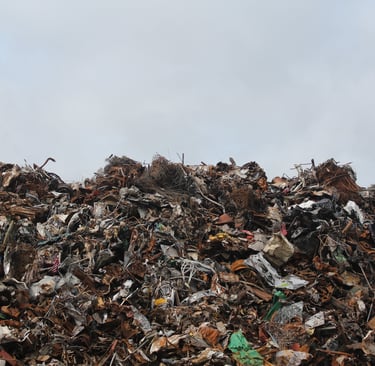
Being told by a local government official that your property is “unsightly” can be stressful. The situation can become even more frustrating if you receive a written order directing you to clean up your property or face legal consequences.
Many property owners react with disbelief or resentment. It may feel as though you are being unfairly singled out, and it can be tempting to simply ignore the order. However, ignoring a cleanup order issued by a local government can be a serious mistake.
Local governments in British Columbia—which include both municipalities and regional districts—have broad powers under legislation such as the Community Charter (2003), the Local Government Act (2015), and applicable bylaws to regulate property conditions. If a property owner refuses to comply with a cleanup order, the local government may escalate enforcement measures. These measures can include fines, additional charges, or even sending workers onto the property to carry out the cleanup and recover the costs. In some cases, unpaid cleanup costs may ultimately be added to the property’s tax roll and collected in the same manner as property taxes (Community Charter, 2003, ss. 17, 255 & 258; Moll & Shergill, 2020, p. 2).
Two Ways Cleanup Orders Are Issued in British Columbia
In British Columbia, there are two primary legal mechanisms through which property owners can be ordered to clean up unsightly conditions on their property.
The first is through a remedial action requirement issued under the Community Charter (Community Charter, 2003, ss. 72 - 75). These provisions apply to municipalities and, through provisions in the Local Government Act, are also extended to regional districts, although the remedial action powers granted to regional districts are somewhat more limited than those available to municipalities (Local Government Act, 2015, ss. 305 & 309; Moll & Howieson, 2011, pp. 2-4).
A remedial action requirement is a legally binding order requiring a property owner or occupier to take specified steps within a set period of time to address unsightly or hazardous conditions on the property.
Remedial action requirements are often used to order property owners to clean up and repair — or even demolish and remove — derelict buildings. They can also be used to require the cleanup of other structures and items on a property (for example fences, vehicles, or accumulations of garbage) that the local government considers so dilapidated or unclean as to be offensive.
The second mechanism arises through local bylaws. Many local governments adopt what are commonly referred to as Unsightly Premises Bylaws (Unsightly Premises Regulation Bylaw No. 3194, 2020 (Regional District of Fraser-Fort George)) that prohibit certain conditions on private property. Sometimes these bylaws are given alternative names such as Property Maintenance Bylaws (Property Maintenance Bylaw No. 07-050, 2015 (City of Victoria)), Good Neighbour Bylaws (Good Neighbour Bylaw #4980, 2005 (City of Vernon)), or something similar, but for the sake of simplicity I will refer to them collectively as Unsightly Premises Bylaws.
In addition to prohibiting unsightly conditions on private property, these bylaws often authorize officials to issue cleanup orders requiring those conditions to be corrected. These bylaws address many of the same issues that remedial action requirements cover.
Can a Cleanup Order Be Challenged?
Cleanup orders are capable of being challenged, although the process depends on the legal mechanism used to issue them.
For remedial action requirements issued under the Community Charter, the legislation provides a formal reconsideration process. While advance notice is not required before issuing the order, the local government must notify the affected owner or occupant after it is imposed and inform them of their right to request reconsideration. If a request is made within the required timeframe, the matter will be reviewed by the local government’s council or board and - depending on their decision - could either be cancelled or modified (Moll & Howieson, 2011, pp. 6-7; Community Charter, 2003, ss. 77-79).
Cleanup orders issued under Unsightly Premises Bylaws do not follow a single standardized appeal process across British Columbia. Instead, the available procedures depend on the wording of the particular bylaw. Many bylaws include the ability for persons to request a municipal council or regional district board reconsider or review these orders (Property Standards Bylaw 2434, 2o18 (City of Fort St. John), ss. 26 - 27), although the details vary from community to community.
Even where a bylaw does not expressly provide an appeal process, it is still possible to challenge the order through an application for judicial review in the Supreme Court of British Columbia. Judicial review allows courts to review administrative decisions made by public authorities, including local governments, although pursuing such a challenge can be time-consuming and potentially costly (Moores, 2021).
Because the procedures can vary, anyone who receives a cleanup order should read the notice carefully. The notice should identify the legal authority under which the order was issued, explain any reconsideration or appeal rights, and set out the deadline for responding.
Practical Considerations
If you believe a cleanup order is unfair or based on incorrect information, it may be helpful to first raise your concerns with the local government. Sometimes issues can be resolved through discussion with the bylaw enforcement officer who issued the order or with a supervisor or manager.
Property owners sometimes respond by arguing that their property is “no worse than anyone else’s.” While this reaction is understandable, it is rarely a successful argument. Local governments generally have broad discretion in how they enforce their bylaws and are not required to take identical enforcement action against every property with similar conditions (Moll, 2024, p. 3-4).
In a small minority of cases, however, an order may be successfully challenged if it can be shown to be clearly unreasonable or is being done for an improper ulterior motive (Moll, 2024, p. 8-10). For example, if a cleanup was ordered when there are no conditions on the property that meet the definition of “unsightly” or an order has been issued to a person because of a discriminatory reason such as their race or religion. Before making these sorts of arguments, however, it is important to review the relevant case law and evidence to see if the argument will stand up in court. This can quickly become complicated, and property owners considering this approach may wish to consult legal counsel.
In many situations, a more productive approach may be to focus on practical solutions. For example, a property owner may be able to request additional time to complete the cleanup or explain circumstances that make compliance within the original timeframe difficult.
Final Thoughts
Receiving a cleanup order from a local government can be stressful, but it is important to take the matter seriously and respond promptly. Ignoring the order can lead to escalating enforcement measures, including fines, cleanup work carried out by the local government, and the possibility that the costs of that work will be added to your property taxes.
Carefully reviewing the order, understanding the applicable deadlines, and communicating with the local government when necessary can often help resolve the issue before it escalates further.
Sources
Community Charter, SBC 2003, c 26. Retrieved on April 5, 2026 from https://www.bclaws.gov.bc.ca/civix/document/id/complete/statreg/03026_00
Good Neighbour Bylaw #4980, 2005 (City of Vernon). Retrieved on April 5, 2026 from https://www.vernon.ca/sites/default/files/docs/bylaws/good_neighbour_bylaw_4980.pdf
Howieson, D. (2008, November 28). Investigating and Enforcing Bylaws [Seminar Paper]. Young, Anderson Barristers & Solicitors. Retrieved on April 5, 2026 from https://www.younganderson.ca/images/seminar_blogs/Investigating_and_Enforcing_Bylaws.pdf
Local Government Act, RSBC 2015, c. 1. Retrieved on April 5, 2026 from https://canlii.ca/t/566f7
Moll, M. (2024, May 16). Questions of Duty, Discretion and Liability [Seminar Paper]. Civic Legal LLP. Retrieved on April 5, ,2026 from https://civiclegal.ca/wp-content/uploads/2025/09/Bylaw-Enforcement-Duty-vs.-Discretion.pdf
Moll, M. & Howieson, D. (2011, June 9). Remedial Action Orders - A "Do It Yourself" Primer [Seminar Paper]. Young, Anderson Barristers & Solicitors. Retrieved on April 5, 2026 from https://www.younganderson.ca/images/seminar_blogs/Remedial_Action_Requirements-LIBOA.pdf.pdf
Moll, M. & Shergill, S. (2020, November 25). Overdue Taxes - Options for Collection [Seminar Paper]. Young, Anderson Barristers & Solicitors. Retrieved on April 5, ,2026 from https://www.younganderson.ca/assets/seminar_papers/2020/Overdue-Taxes-Options-for-Collection.pdf
Property Maintenance Bylaw No. 07-050, 2015 (City of Victoria). Retrieved on April 5, 2026 from https://www.victoria.ca/media/file/property-maintenance-bylaw-07-050
Property Standards Bylaw 2434, 2018 (City of Fort St. John). Retrieved on April 5, 2026 from https://www.fortstjohn.ca/media/file/property-standards-bylaw
Unsightly Premises Regulation Bylaw No. 3194, 2020 (Regional District of Fraser-Fort George). Retrieved on April 5, 2026 from https://www.rdffg.bc.ca/sites/default/files/2023-11/Unsightly%20Premises%20Regulation%20Bylaw.pdf
Moores, E. (2021, May 12). What is judicial review and why should you care about it? Unsolicited. Retrieved on April 5, 2026 from https://goldblattpartners.com/unsolicited-blog/what-is-judicial-review-and-why-should-you-care-about-it/
DISCLOSURE:
Generative AI tools were used to assist with drafting and editing this article. Final review and editorial control remained with the author.
Information on this site is for general information and educational purposes only and is not legal advice.
For guidance specific to your situation, consult a qualified BC lawyer or paralegal.