Written by Michael Tillmann in Quick Bylaw Answers
A discussion of the legal authority and practical considerations related to the power of arrest held by bylaw enforcement officers in British Columbia.
June 11, 2026 · 3 min read
[Last revised June 13, 2026]
Imagine the following scenario.
You come out of a store in a community somewhere in British Columbia and discover a local bylaw enforcement officer, employed by the municipality, in the process of having your vehicle towed for an alleged parking violation. You ask what is happening and are told that the vehicle is being impounded because it is parked illegally.
An argument follows. Tempers rise. Frustrated, you decide that you are going to get into the vehicle and drive away before the tow truck can remove it. The officer steps in and tells you that if you attempt to do so, you will be arrested.
Many people would assume that the officer is bluffing. After all, bylaw enforcement officers are not police officers.
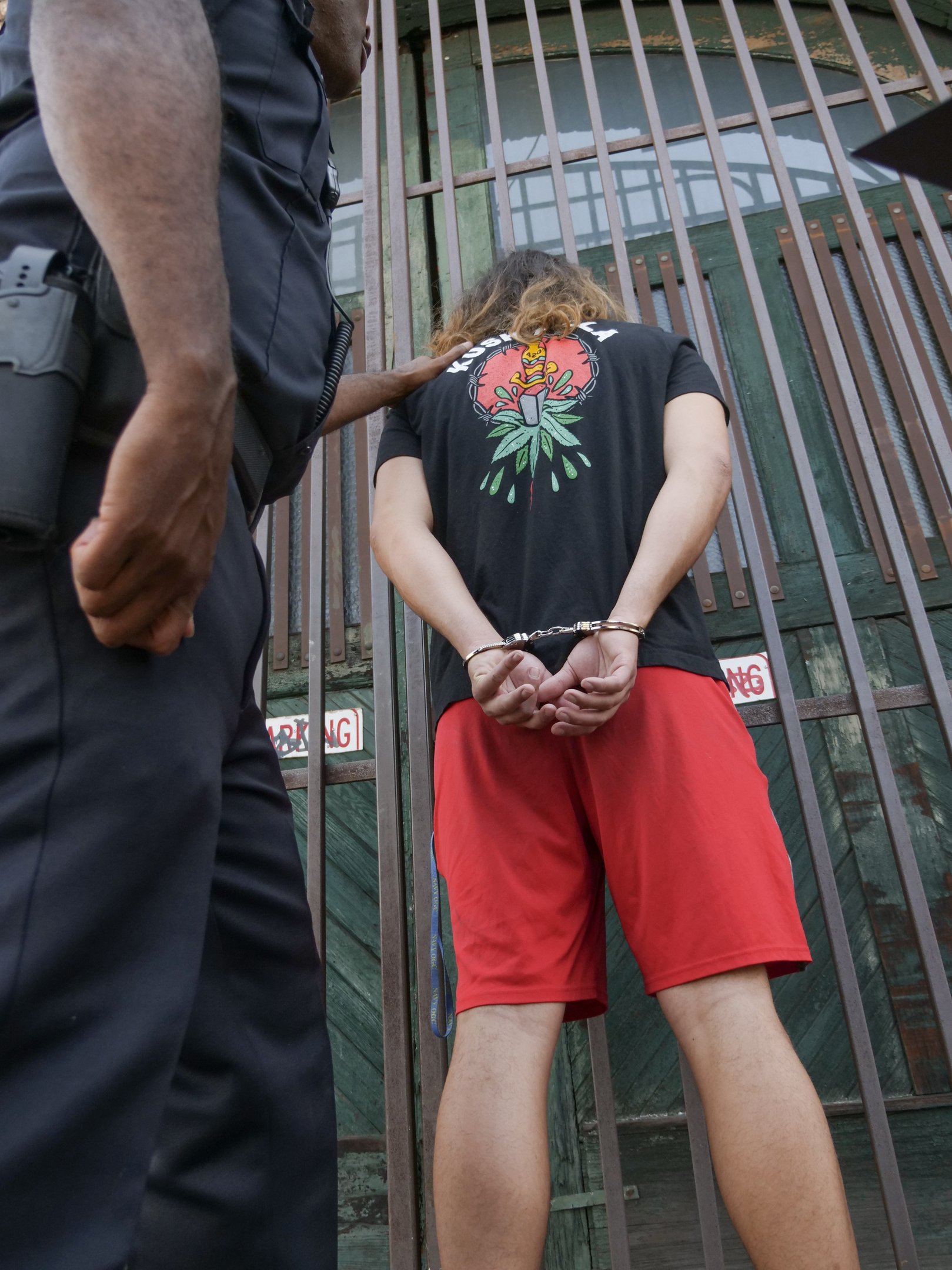
You may be surprised to learn that, in some circumstances, the officer may actually have the legal authority to do exactly that.
Many people are unaware that British Columbia courts have recognized a limited power of arrest for bylaw enforcement officers in certain situations. While arrests by bylaw officers are relatively uncommon compared to arrests made by police officers, the issue has come before the courts and those courts have upheld the legality of such arrests in appropriate circumstances.
The key point is that the arrest authority does not arise from whether a person has violated a bylaw, whether it be a parking regulation or any other bylaw. Rather, the issue arises when a person obstructs a bylaw enforcement officer who is lawfully carrying out their duties.
In these cases, the Provincial Court of British Columbia concluded that municipal bylaw enforcement officers acting in the execution of their duties fell within the definition of “peace officer” found in the Criminal Code (1985). As a result, the court found that persons who obstructed those officers were committing the offence of obstructing a peace officer and could be lawfully arrested. The cases in question include R. v. Turko (2000) and Woodward v. Capital Regional District (2005), both of which involved persons who were resisting being issued tickets for bylaw violations, either by refusing to identify themselves or by attempting to leave the scene before a ticket could be issued.
Some municipalities and groups in British Columbia have lobbied the provincial government for changes to the Police Act which would recognize certain categories of bylaw enforcement personnel (i.e. the ones having titles like community safety officer or similar) as peace officers (City of Kamloops, 2025; Holliday, 2025; Local Government Compliance and Enforcement Association, 2021). However, the decisions discussed above suggest that, in certain circumstances, municipal bylaw enforcement officers may possess authority under the Criminal Code even without such an explicit recognition in provincial legislation.
It is important to note that these decisions were issued by the Provincial Court rather than an appellate court. No appellate court in British Columbia appears to have directly addressed this issue. Nevertheless, these decisions have stood for many years without being overturned and continue to be cited within the bylaw enforcement community (Local Government Compliance and Enforcement Association, n.d.).
This does not mean that a bylaw enforcement officer possesses the same broad powers as a police officer. Nor does it mean that every disagreement with a bylaw officer can result in an arrest. What it does mean is that members of the public should be aware that interfering with a bylaw officer who is lawfully carrying out their responsibilities can have consequences that extend well beyond the original bylaw violation.
The next time someone tells you that a bylaw officer “can’t arrest anyone,” the correct legal answer may be more complicated than they expect.
Sources
City of Kamloops. (2025, September 2). City of Kamloops Swears in First Cohort of Community Services Officers with Peace Officer Status. Retrieved June 10, 2026 from https://www.kamloops.ca/our-community/news-events/news-releases/city-kamloops-swears-first-cohort-community-services
Criminal Code, RSC 1985, c C-46. Retrieved on June 12, 2026 from https://canlii.ca/t/7vf2#sec2
Holliday, K. (2025, September 3). City of Kamloops hosts swearing-in ceremony for CSOs with peace officer status. Castanet. Retrieved June 13, 2026 from https://www.castanetkamloops.net/news/Kamloops/570079/City-of-Kamloops-hosts-swearing-in-ceremony-for-CSOs-with-peace-officer-status
Local Government Compliance and Enforcement Association. (n.d.). Frequently Asked Questions. Retrieved June 10, 2026 from https://www.bylawbc.ca/faq.htm
Local Government Compliance and Enforcement Association (2021, April). Amending BC’s Police Act: LIBOA Submission to the Special Committee on Reforming the Police Act [Paper submitted to Special Committee of the BC Legislative Assembly]. Retrieved June 13, 2026 from https://www.bylawbc.ca/docs/lgcea_submission_to_special_committee_on_reforming_the_police_act.pdf
R. v. Turko (2000, November 20), Victoria (BCPC). Retrieved June 10, 2026 from https://www.bylawbc.ca/docs/turko_case_law.pdf
Woodward v. Capital Regional District (2005, February 9), Victoria C02-0723 (BCPC). Retrieved June 10, 2026 from https://www.bylawbc.ca/docs/woodward_case_law.pdf
Disclosure
Generative AI tools were used to assist with drafting and editing this article. Final review and editorial control remained with the author.