You’re Thinking of Reporting Your Neighbour’s Noisy Dog to Bylaw Enforcement – What Now?
A discussion of what bylaw enforcement officers in British Columbia can, and cannot, do to resolve dog barking complaints.

You're Thinking of Reporting Your Neighbour's Noisy Dog to Bylaw Enforcement - What Now?
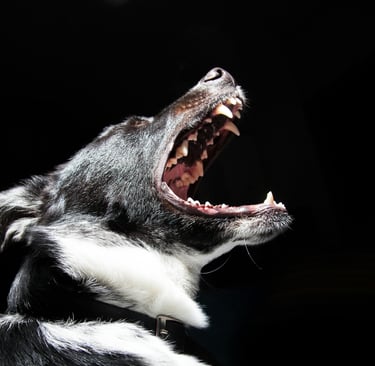
Dogs are one of the most common companion animals in residential neighbourhoods. Many households have dogs, and they often contribute positively to community life. However, excessive barking can quickly become disruptive and significantly affect the quality of life of nearby residents. As a result, dog barking concerns are some of the most frequent complaints received by bylaw enforcement officers (Mutter, 2023).
So, what can be done if you have a neighbour with a dog that will not stop barking? Depending on the circumstances, your local bylaw enforcement officer may be able to help.
Regulations Vary by Community
To begin, it is important to understand that British Columbia has no single provincial framework governing barking dog complaints. Regulation is handled at the local government level, which means rules can vary significantly between communities (People’s Law School, n.d.).
Depending on the location, barking may be regulated under either a general noise bylaw, an animal control bylaw, or both (British Columbia Society for the Prevention of Cruelty to Animals, n.d.). In some rural areas outside municipalities, there may not be any applicable bylaw, in which case enforcement options will be limited (Regional District of Fraser-Fort George, n.d.).
Where bylaws exist, some prohibit noise that disturbs the neighbourhood (Noise Regulation Bylaw No. 2507, 2019 (City of Fort St. John), s. 5(d)), while others set specific time durations or times of day that render barking a violation (Responsible Animal Ownership Bylaw No. 8898, 2017 (City of Prince George), ss. 2.1 & 8.1). The applicable legal test therefore depends largely on the wording of the local bylaw.
Where no bylaw applies, residents are not entirely without recourse. The common law tort of nuisance may provide a remedy in cases of excessive noise, but this requires commencing a private civil lawsuit against the dog owner (Shepherd, 2024; Steacy, 2024). Civil litigation can be complex, time-consuming, and expensive, and anyone considering this route is encouraged to seek legal advice.
Who Handles Complaints?
Responsibility for investigating noise complaints—including dog barking complaints—and taking enforcement action depends on the local government. In most cases, bylaw officers handle these complaints, though in some jurisdictions local police may assist with this task (Surrey Police Service, 2022, s. 3.3).
During my years working as a bylaw enforcement officer, it was my experience that police would understandably decline to respond to noise complaints during office hours when bylaw officers were available to respond instead. Even after office hours, a police response was not guaranteed, as officers needed to consider factors such as how busy they were with other matters and the severity of the alleged disturbance.
When uncertain about where to direct a complaint, the appropriate first step is usually to contact the local government for guidance. If you do contact the police about the matter, one should never call 911, but rather the non-emergency telephone number.
Evidence Will Be Required
Barking dog complaints are generally complaint-driven and evidence-based. Before taking enforcement action, officers will assess whether the reported conduct appears to contravene the applicable bylaw. Depending on the community in question and the wording of the particular bylaw, this may involve determining whether the barking constitutes a neighbourhood disturbance, occurs at a prescribed time of day, exceeds a prescribed time duration or could be classified as unreasonable or excessive (City of New Westminster, n.d.; District of Barriere, n.d.; Regional District of Central Okanagan, n.d.; Victoria Animal Control Services Ltd., n.d.).
If the complaint appears to fall within the scope of the bylaw, complainants may then be asked to provide supporting evidence. This often includes a written complaint and a barking log documenting dates, times, frequency, and duration of incidents (City of Vancouver, n.d.). Some communities may ask for audio or video recordings in certain cases (City of New Westminster, n.d.). Such documents and other evidence help establish ongoing or repeated conduct, as isolated incidents may not meet the threshold for enforcement.
It is also important that the complainant correctly identifies the source of the barking. Complainants should make reasonable efforts to ensure they have correctly identified the source of the noise; i.e. the exact address where the dog is located and a description of the dog. Bylaw enforcement officers may refuse to act on a complaint unless the dog is identified to their satisfaction (City of New Westminster, n.d.). This is important later in the event a dog owner disputes a complaint, claiming they “have the wrong dog.”
What Happens After a Complaint?
Enforcement typically begins with a focus on voluntary compliance rather than penalties. In many cases, officers will first attempt to encourage the dog owner to reduce or stop the barking before issuing fines. This process is known in the bylaw enforcement sector as seeking ‘voluntary compliance’ from the dog owner (City of Coquitlam, n.d.b.).
Seeking voluntary compliance typically involves contacting or visiting the dog owner, advising them of the complaint, and recommending corrective measures. In my experience, common corrective measures which may be suggested can include bringing the dog indoors at certain times, reducing environmental triggers, improving fencing or visual barriers, and increasing training or supervision. The emphasis at this stage is on resolving the issue rather than imposing penalties.
Who Will Know You Complained?
During the initial stages of an investigation and voluntary compliance efforts, bylaw officers are generally required to keep complainant identity confidential (City of Vancouver, n.d.). Privacy legislation and standard administrative practices generally restrict disclosure of complainant information to the alleged offender at this stage.
There are limited exceptions. Identity may be disclosed if the complainant voluntarily identifies themselves or if disclosure is necessary to properly investigate the complaint. These situations are uncommon and fact specific (Freedom of Information and Protection of Privacy Act, ss. 33(2)(d) & 34).
As a general rule, confidentiality is maintained during the investigative and voluntary compliance stages. However, this changes if the matter escalates to formal enforcement action.
If the Problem Continues
If the barking persists and meets the applicable bylaw threshold, the local government may issue a ticket. The dog owner then has the right to dispute it.
Depending on the enforcement mechanism used, disputes generally proceed in one of two ways:
If a Municipal Ticket Information (MTI) is issued, the matter is heard in Provincial Court (Government of British Columbia, 2024).
If a Bylaw Notice is issued, the matter proceeds through an adjudication process presided over by an adjudicator outside the traditional court system (Government of British Columbia, 2022).
In both cases, an independent decision-maker—such as a judge, justice of the peace, or adjudicator—reviews the evidence and determines whether a bylaw violation has occurred.
When Your Identity May Be Revealed
If the matter is disputed, the complainant may become a witness, and confidentiality can no longer be guaranteed.
Where an MTI is disputed in Provincial Court, standard court rules apply. The local government prosecutes the matter and must disclose all relevant evidence to the defence. This includes the complainant’s identity and any supporting materials, regardless of whether the complainant ultimately testifies (City of Coquitlam, n.d.a.).
Where a Bylaw Notice is disputed through adjudication, the process is less formal but still requires procedural fairness. The local government must present sufficient evidence to establish the violation. If complainant evidence is relied upon—such as a barking log or written statement—the complainant’s identity will generally need to be disclosed so the respondent can fairly respond to the case against them (City of Coquitlam, n.d.a.).
Before Filing a Complaint
Before contacting bylaw enforcement with a dog barking complaint, you may wish to consider:
whether you may prefer speaking with the dog owner instead, if it is a safe and appropriate option;
whether the barking is excessive or merely a brief or occasional occurrence;
whether there is a bylaw regulating barking dogs in your location;
whether you are willing to complete a written complaint form if requested;
whether you are willing to provide a written record documenting the dates, times and durations of the dog barking (a “barking log”);
whether you have correctly identified which dog in your area is barking (the dog’s address and description); and
whether you are willing to be a witness in a trial or hearing process if the matter is disputed.
Conclusion
If you are experiencing ongoing issues with a neighbour’s barking dog, contacting your local bylaw officer can be an effective solution. Many complaints are resolved at an early stage through informal intervention and voluntary compliance.
Before filing a complaint, however, it is worth considering whether you are prepared to document the issue and participate in a trial or adjudication hearing if the matter progresses that far. If enforcement action is challenged, your involvement—and potentially your identification—may be required to support the case.
References
British Columbia Society for the Prevention of Cruelty to Animals. (n.d.). The dog next door is barking all the time, who do I complain to? Retrieved May 6, 2026, from https://spca.bc.ca/faqs/the-dog-next-door-barking-time-complain/
City of Coquitlam (n.d.a.) Complaint process. Retrieved on May 25, 2026 from https://www.coquitlam.ca/528/Complaint-Process
City of Coquitlam (n.d.b.). Complaints & enforcement. Retrieved on May 25, 2026 from https://www.coquitlam.ca/551/Complaints-Enforcement
City of New Westminster (n.d.). Barking dogs. Retrieved May 13, 2026, from https://www.newwestcity.ca/services/animal-services/frequently-asked-questions/sb_expander_articles/760.php
City of Vancouver. (n.d.). Report a barking dog. Retrieved May 13, 2026, from https://vancouver.ca/home-property-development/dogs.aspx
District of Barriere. (n.d.). Bylaw Enforcement. Retrieved May 13, 2026, from https://www.barriere.ca/p/bylaw-enforcement
Freedom of Information and Protection of Privacy Act, RSBC 1996, c. 165. https://canlii.ca/t/56phk
Government of British Columbia (2022, December 7). Local government bylaw notices. Retrieved May 25, 2026 from https://www2.gov.bc.ca/gov/content/governments/local-governments/governance-powers/bylaws/bylaw-enforcement/bylaw-notices
Government of British Columbia. (2024, February 28). Municipal ticketing. Retrieved May 25, 2026 from https://www.bibguru.com/g/apa-government-website-citation/
Mutter, C. (2023, October 17). Excessive barking the most common complaint to North Okanagan dog control. Castanet. Retrieved May 13, 2026, from https://www.castanet.net/news/Vernon/452425/Excessive-barking-the-most-common-complaint-to-North-Okanagan-dog-control
Noise Regulation Bylaw No. 2507, 2019 (City of Fort St. John). Retrieved May 7, 2026, from https://www.fortstjohn.ca/media/file/noise-regulation-bylaw
People’s Law School. (n.d.). Pets at home. Retrieved May 6, 2026, from https://www.peopleslawschool.ca/pets-at-home/
Regional District of Central Okanagan (n.d.). Dog complaints. Retrieved May 13, 2026, from https://www.rdco.com/living-here/dog-licences-and-control/dog-complaints/
Regional District of Fraser-Fort George. (n.d.). Common bylaw concerns. Retrieved May 6, 2026, from https://www.rdffg.ca/services/bylaw-enforcement/common-bylaw-concerns
Responsible Animal Ownership Bylaw No. 8898, 2017 (City of Prince George). Retrieved May 7, 2026, from https://www.princegeorge.ca/sites/default/files/2023-04/BL8898_BYLAW-ADOPTED.pdf
Shepherd, J. (2024, February 9). Supreme Court upholds decision in barking dog case. Tri-Cities Dispatch. Retrieved May 7, 2026, from https://tricitiesdispatch.com/dog-barking-neighbour-judgment/
Steacy, L. (2024, October 16). ‘Vindictive and malicious’: B.C. court weighs in on long-running neighbour dispute. CTV News. Retrieved May 7, 2026, from https://www.ctvnews.ca/vancouver/article/vindictive-and-malicious-bc-court-weighs-in-on-long-running-neighbour-dispute/
Surrey Police Service. (2022). Operational Policy 4.3 Animal Complaints. Retrieved May 13, 2026, from https://surreypolice.ca/sites/default/files/media/documents/op_4.3_animal_complaints_-_public.pdf
Victoria Animal Control Services Ltd. (n.d.). Noisy dogs. Retrieved May 13, 2026, from https://www.vacs.ca/regulations/noisy-animals
DISCLOSURE:
Generative AI tools were used to assist with drafting and editing this article. Final review and editorial control remained with the author.
Information on this site is for general information and educational purposes only and is not legal advice.
For guidance specific to your situation, consult a qualified BC lawyer or paralegal.