Category: An Interesting Case

  • The Free the Beer Case

    Written by Michael Tillmann in An Interesting Case

    This is the interesting Free the Beer Case – or to use its correct legal name – the case of R. v. Comeau., which was decided in the Supreme Court of Canada in 2018. It is the story of Gerard Comeau who left his home province of New Brunswick to take a shopping trip across the border in Quebec, pick up some liquor and then return home. In the process he ran afoul of the New Brunswick Liquor Control Act, had his liquor confiscated and was fined. It is also the story of his legal battle to have his ticket thrown out and to have the courts strike down the portion of the Liquor Control Act that impairs the ability of persons to transport liquor across the provincial border.

    February 18, 2024 · 7 min read
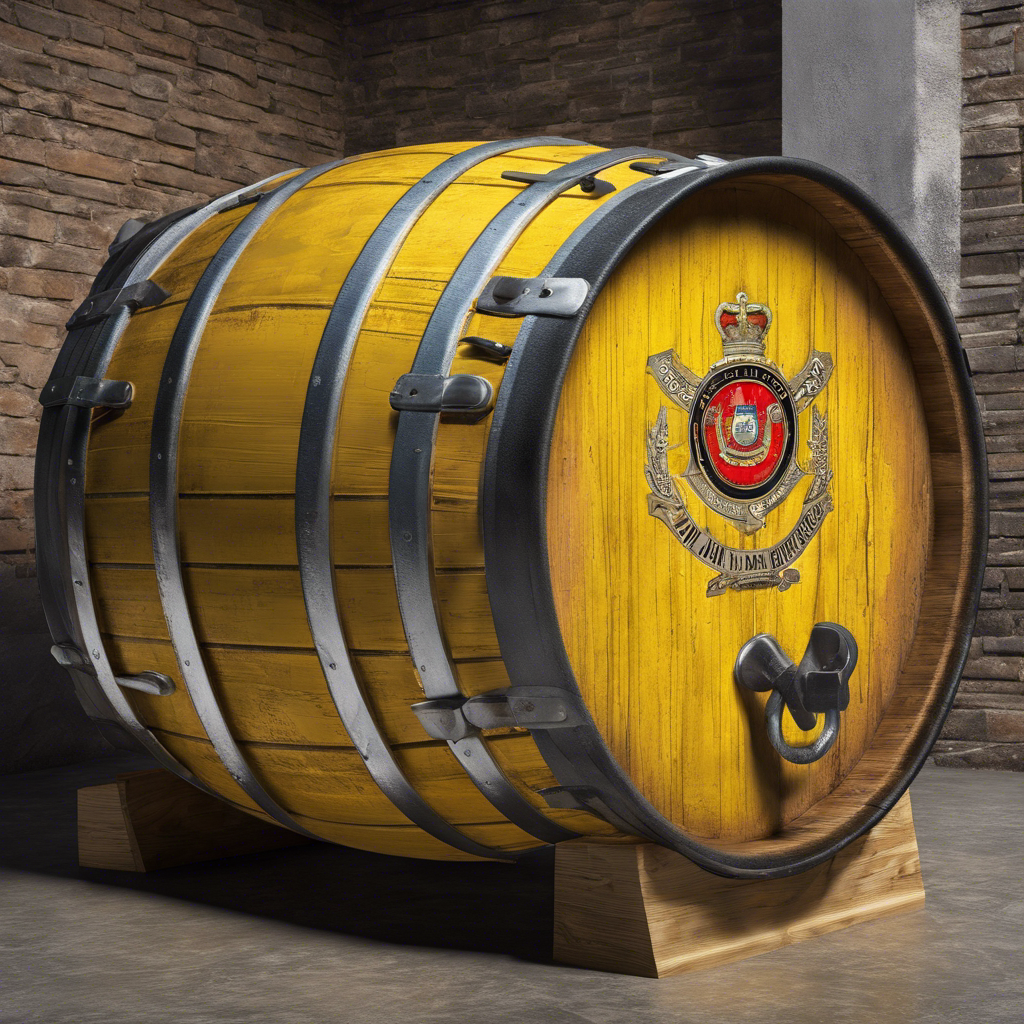
    The Free the Beer Case

    This is the interesting case of Free the Beer, or to use its correct legal name, the case of R v. Comeau.

    The case relates to an incident in 2012 where a Mr. Gerard Comeau decided to cross from his home province of New Brunswick into the neighbouring province of Quebec, purchase some alcohol and then return home.  In the process, he ran afoul of New Brunswick’s Liquor Control Act, had his alcohol confiscated by police and was issued a nearly $300 ticket.  The case was decided by the Supreme Court of Canada in 2018 but the story begins almost 6 years earlier.

    On October 6th, 2012, Mr. Gerard Comeau left his home in the Tracadie-Sheila region in New Brunswick and drove roughly 178 kilometres to Campbellton, New Brunswick.  It is here that the Restigouche River forms the border between the province of New Brunswick to the south and the province of Quebec to the north.  Driving across the border at Campbellton, Mr. Comeau entered the community of Pointe-a-la-Croix and the Indigenous community of the Listuguj First Nation, both on the northern Quebec side of the river.  He then proceeded to go shopping at three different liquor stores in those communities.

    It was not uncommon for residents of New Brunswick to cross the border to purchase liquor in Quebec, as the prices in that province were lower.  However, the province of New Brunswick had enacted a provincial law, the Liquor Control Act, which regulated how liquor could be made, sold, possessed and used in the province.  Amongst other things, this Act prohibited anyone in New Brunswick from possessing more than 12 pints of alcohol, unless it had been purchased from a New Brunswick government store.

    As an aside, it is recognized that it may be odd to persons from some countries that a government would get directly involved in the sale of alcohol, but it is not an uncommon practice in Canada.  Every province in Canada have decided that they wish to control the sale and distribution of liquor to the public and, to accomplish this, they have all set up some sort of government owned liquor business to do it, with liquor control laws to accompany them; the one exception being Alberta which privatized its government stores in 1993.

    These government owned liquor stores have monopolies of varying degrees over the market because the liquor laws restrict the ability of private businesses to sell liquor.  For example, in the province of British Columbia, liquor can only be sold in a government store or in a private store that is granted a liquor licence.

    Some have criticized these government liquor operations as unfair monopolies which needlessly drive up the price of alcohol.  These critics often view the reason for governments for creating these systems of government stores as primarily to generate revenue.  Those on the opposite side of the debate would point out that government involvement helps to minimize social problems associated with alcohol, by ensuring high standards are set and observed (such as ensuring minors are not able to enter government stores where liquor is sold, discouraging over consumption by selling at prices that are excessively low, etc.).  And they would also note that revenues generated in government stores can be used for public services.

    Now, let us turn back to Mr. Comeau and the events of October 6th, 2012.

    Unfortunately for Mr. Comeau that day, he had purchased liquor exceeding the limit prescribed in the Liquor Control Act and this meant that, as soon as he crossed back across the border into New Brunswick with his purchases, he would be in violation of that law.  Also, unfortunately for Mr. Comeau, authorities had taken notice of the fact that many New Brunswickers were circumventing the province’s liquor laws by importing large amounts from Quebec and – to respond to this – had begun to monitor the border.

    Therefore, while Mr. Comeau was on his liquor shopping trip in Pointe-a-la-Croix, he was being watched by members of the Royal Canadian Mounted Police (the RCMP) in unmarked police vehicles.  These officers reported back their observations to their counterparts in New Brunswick. Once Mr. Comeau drove his truck back into New Brunswick, he was pulled over by officers from the Campbellton detachment of the RCMP.  Upon searching his vehicle, the police found him in possession of 15 cases of beer (totaling 354 bottles and cans) and 3 bottles of spirits, which exceeded the limit allowed by the Liquor Control Act.  The alcohol was seized, and Mr. Comeau was issued with a ticket for the violation, amounting to $240 plus some fees, which brought the sum to just under $300.

    Mr. Comeau decided to fight his ticket and, in 2016, the matter went to trial in New Brunswick Provincial Court.  There he argued the Liquor Control Act limit on possessing alcohol obtained from outside the province was contrary to the Canadian Constitution and pointed to section 121 of the Constitution Act, 1867 which declared that a good or product from one Canadian province must be “admitted free” into another province.  His defence argued that this meant the Constitution intended there to be free trade in goods between the provinces and that any law, such as the Liquor Control Act, which interfered with that free trade was unconstitutional.

    The prosecution denied this interpretation of the Constitution put forward by Mr. Comeau.  They pointed out that section 121 of the Constitution Act, 1867 had already been litigated before and that almost a century prior the Supreme Court of Canada had ruled that it was only meant to prevent provinces from charging customs duties for goods crossing their borders, and not intended to prevent other sorts of regulations.  They stated that this previous decision of the Supreme Court was binding and that Mr. Comeau’s argument should be rejected.

    The case and the arguments and counterarguments gained a lot of attention, amongst the public, amongst government officials and others.  Many Canadians supported Mr. Comeau’s fight to do away with limits on the interprovincial flow of alcohol, and indeed other interprovincial trade barriers.  One poll conducted in 2017, which sought to gauge public opinions on the matter, reported back that 89% of respondents were in favour of Canadians being able to transport any legal product between provinces.  A team of lawyers even offered their services for free to Mr. Comeau.

    However, other parties, including other provincial governments were loudly opposed to Mr. Comeau’s crusade.  They asserted that, if the court ruled in Comeau’s favour, not only would it jeopardize the ability of provinces to regulate liquor distribution and sales, but it would set a new precedent that would cause all sorts of other trade regulations to come crashing down.  Laws protecting agricultural sectors and environmental protection regulations were cited as examples of laws that could end up being struck down.

    After considering the arguments, and hearing evidence from a historian who testified as to what the intentions of the drafters of the Canadian Constitution were, Judge Roland LeBlanc of the Provincial Court gave his judgment.  He ruled in favour of Mr. Comeau and found that section 121 of the Constitution Act, 1867 had previously been incorrectly interpreted by the Supreme Court, declaring that mistake could now be seen because there had been significant new evidence presented, such as the expert testimony of the historian.  Judge LeBlanc struck down the provision in the Liquor Control Act which put limits on possessing liquor obtained from out-of-province and found Mr. Comeau not guilty.

    The prosecutor immediately appealed this ruling to a higher court, the New Brunswick Court of Appeal.  However, the appellate court refused to hear the case.  This denial was a setback for the government’s attempts to maintain the Liquor Control Act unchanged.  Consequently, the government prosecutor then appealed to the Supreme Court of Canada to take up the matter, and that highest court in the land agreed to do so.

    On April 19th, 2018, the Supreme Court of Canada handed down its judgment.  It overturned the decision of the trial judge, stating he had been incorrect to strike down the provision of the Liquor Control Act and not follow the precedent set by the Supreme Court in its earlier decisions.  It further declared that the trial judge had improperly relied on the historian’s testimony.  The court clarified that section 121 of the Constitution Act, 1867 – where it talked of products from other provinces being “admitted free” – was not intended to institute interprovincial free trade without any restrictions.  Instead, it was meant to stop provinces from instituting laws that were mainly aimed at restricting trade across borders, such as tariffs, and not other laws that may have some incidental impact on trade but were not directly aimed at it. 

    Since the Liquor Control Act wasn’t primarily targeted at interprovincial trade it was valid and constitutional, even if it had some side effects on trade like making it harder to import beer. To quote from the decision of the court: “The objective of the New Brunswick scheme is not to restrict trade across a provincial boundary, but to enable public supervision of the production, movement, sale and use of alcohol within New Brunswick.”

    And so, the Supreme Court had upheld the liquor laws and liquor monopoly of the New Brunswick government, and by extension, the similar systems in the other provinces.  Much to the chagrin of many beer drinkers no doubt.

    SOURCES:

    Alberta Gaming, Liquor and Cannabis, (n.d.). About liquor in Alberta. aglc.ca. https://aglc.ca/liquor/about-liquor-alberta

    Bisset, K. (2018, April 18). Supreme Court ruling on New Brunswick man’s border-beer battle could change Confederation. Global News. https://globalnews.ca/news/4152904/supreme-court-ruling-on-new-brunswick-mans-border-beer-battle-could-change-confederation/

    Campbell, D. (2013, April 30). Canada is proof that state-controlled drinking is good for health. The Guardian. https://www.theguardian.com/society/2013/apr/30/canada-state-controlled-drinking-health

    Liquor Control Act, RSNB 1973, c L-10. https://canlii.ca/t/564nd

    Novac, N. (2017, October 17). Tempering R v Comeau : A Primer on the Interprovincial Trade Debate (Part 1). Thecourt.ca. https://www.thecourt.ca/tempering-r-v-comeau-a-primer-on-the-interprovincial-trade-debate/

    Platt, B. (2018, April 19). ‘Free the beer’ case loses at Supreme Court, as trade barriers between provinces are ruled constitutional. National Post. https://nationalpost.com/news/politics/free-the-beer-case-loses-at-supreme-court-as-provincial-trade-barriers-are-upheld-as-constitutional

    R v Comeau, 2016 NBPC 3 (CanLII). https://canlii.ca/t/gpr3f

    R. v. Comeau, 2018 SCC 15 (CanLII), [2018] 1 SCR 342. https://canlii.ca/t/hrkm6

    Supreme Court of Canada. (2018, April 19). Case in Brief: R. v. Comeau. Supreme Court of Canada. https://www.scc-csc.ca/case-dossier/cb/37398-eng.aspx

    The Canadian Press. (2023, December 14). A look at alcohol sales rules by province across Canada. Global News. https://globalnews.ca/news/10171555/alcohol-sales-rules-by-province/

    The Constitution Act, 1867, 30 & 31 Vict, c 3. https://canlii.ca/t/ldsw

    Valiante, G. (2017, November 28). Canadians want to be freed from provincial alcohol monopolies: poll. CTV News. https://www.ctvnews.ca/business/canadians-want-to-be-freed-from-provincial-alcohol-monopolies-poll-1.3697268

  • The Case of Bylaw Officers & Bar Room Brawls

    Written by Michael Tillmann in An Interesting Case

    This is the interesting case of Bylaw Officers & Bar Room Brawls, or to use its correct legal name, the case of R. v. Turko. It is the story of Mr. Gerald Turko who decided to have a cigarette, the four bylaw enforcement officers who tried to issue him a ticket for violating the Clean Air Bylaw and the physical altercation that ensued, along with that altercation’s legal consequences. The case was decided in the Provincial Court of British Columbia in November of the year 2000, but the incident in question occurred nearly a year before.

    February 16, 2024 · 9 min read

    The Case of Bylaw Officers & Bar Room Brawls

    This is the interesting case of Bylaw Officers & Bar Room Brawls, or to use its correct legal name, the case of R. v. Turko.  It is the story of Mr. Gerald Turko who decided to have a cigarette, the four bylaw enforcement officers who tried to issue him a ticket for violating the Clean Air Bylaw and the physical altercation that ensued, along with that altercation’s legal consequences.  The case was decided in the Provincial Court of British Columbia in November of the year 2000, but the incident in question occurred nearly a year before.

    On October 19th, 1999, Gerald Turko visited Big Bad John’s, a bar located in the Strathcona Hotel in downtown Victoria, British Columbia.  Mr. Turko had a beer and was smoking a cigarette.  On January 1st, 1999, the Capital Regional District (which is a regional government with jurisdiction over the southern end of Vancouver Island, including the city of Victoria) had enacted a Clean Air Bylaw which prohibited smoking inside public buildings, but the staff of the bar were allowing their patrons to contravene the bylaw[1].

    That evening, a team of four bylaw enforcement officers employed by the Capital Regional District happened to attend Big Bad John’s, looking for violations of the Clean Air Bylaw.  This team included Chief Bylaw Enforcement Officer Miles Drew, Bylaw Enforcement Officer Janie Thomas, Bylaw Enforcement Officer Ian Fraser, and Bylaw Enforcement Officer Stefan Drouin.

    On entering the bar, Officer Thomas witnessed Mr. Turko smoking.  She approached him to advise him that he was violating the bylaw and that she intended to issue him a $50 ticket.  She then asked him for his driver’s licence so she could use the information to fill out the ticket.  He replied that he did not have one, so she asked him for his name and address, but he refused to provide them.

    Officer Thomas and Mr. Turko then engaged in a back-and-forth conversation where Mr. Turko challenged her authority to demand his identity.  Officer Thomas explained that she was a peace officer and, if he did not identify himself as she had requested, he would be guilty of the crime of obstructing a peace officer.  Mr. Turko’s response was to say, “You’re not peace officers.  I don’t have to tell you anything.”

    Mr. Turko then decided to stand up and began to walk away, leaving the bar room and exiting into the lobby.  The four bylaw officers followed him into the lobby.  The officers stood around him and continued to try to convince him to identify himself so a ticket could be issued.  Mr. Turko asked if he was being detained.  Officer Thomas did not directly answer but told Mr. Turko that he couldn’t leave until he identified himself and warned that he could be arrested for obstructing a peace officer. 

    Mr. Turko continued to refuse to identify himself and proclaimed that he was leaving.  When Chief Bylaw Enforcement Officer Drew, who was standing in front of Mr. Turko, put up his hands and told Mr. Turko to wait, Mr. Turko instead pushed into Chief Bylaw Enforcement Officer Drew, knocking him over.  The other officers then intervened, physically grappling Mr. Turko, taking him to the floor and handcuffing him.  The officers informed Mr. Turko he was under arrest for obstruction, and he was cautioned on his right to remain silent, though he was not explained his right to contact a lawyer (apparently because the bylaw officers presumed the police would handle this when they arrived).

    As an unfriendly crowd was beginning to gather round and taunt the bylaw officers, the officers then decided to take Mr. Turko outside to wait for the police to arrive.  Outside, there was a little more drama as Mr. Turko threatened to kick one of the officers and made a kicking motion with his foot, but it failed to connect with anyone.  It’s not entirely clear whether Mr. Turko intended the kick to strike anyone or if he was simply going through the motions of defiance. 

    After some time, the police arrived and took custody of Mr. Turko, and the incident came to a close.

    In the weeks and months that followed, Mr. Turko was charged with obstruction of a peace officer and assaulting a peace officer, contrary to the Criminal Code of Canada.  The case went to trial in the Provincial Court of British Columbia in 2000 and, at the trial, Mr. Turko and his defence counsel raised several issues. 

    For one thing, Mr. Turko testified he had trouble hearing what Officer Thomas was saying and understanding what she wanted when she approached him in the bar room.  However, the trial judge found that Officer Thomas properly identified and explained herself, and that Mr. Turko had heard her.  The judge noted that Mr. Turko had testified he had been speaking to some other persons in the bar earlier and had apparently not had trouble hearing or understanding them.

    Mr. Turko also asserted that he didn’t assault Chief Bylaw Enforcement Officer Drew and a witness for the defence – who was working in the establishment that night – gave testimony stating she hadn’t seen Mr. Turko push him.  He also claimed that he continued to not identify himself because he never had a clear understanding of who the officers were or what their authority was.  The trial judge however was satisfied that Mr. Turko did shove into the bylaw officer and that it had been clearly explained to him that he needed to identify himself or else face legal consequences.  In general, the judge did not find Mr. Turko’s testimony persuasive, commenting in his judgment as follows: “Generally, his evidence was evasive and inconsistent.”

    The defence also raised multiple legal questions, the most important being whether the bylaw officers qualified as peace officers under the Criminal Code.  After reviewing the text of the Code and relevant caselaw, the Provincial Court judge determined that bylaw officers did qualify as peace officers under the definition found in section 2 of the Criminal Code.  Specifically, the judge cited paragraph (c) of the definition which refers to “a police officer, police constable, bailiff, constable, or other person employed for the preservation and maintenance of the public peace.”  The judge found that bylaw officers, by the nature of their duties, were persons employed to preserve and maintain the public peace and therefore met the definition of peace officers.

    Considering these findings, the judge convicted Mr. Turko of the two crimes he was charged with, obstructing and assaulting a peace officer.

    At this point, I’d like to dig a little deeper into the issue of peace officer status for bylaw officers which this case dealt with.

    It is worth mentioning here that the Turko case is often cited by bylaw enforcement officers in British Columbia as proof of their peace officer status.  This is because, from time to time, people will challenge the authority of bylaw officers to enforce laws, much as Mr. Turko did, and when they do this an argument often arises as to whether bylaw officers are peace officers, again as it did in R. v. Turko.

    This argument is pertinent because, under Canadian law, persons with peace officer status have certain legal protections when enforcing the law that other individuals do not.  As an example, if you interfere with a peace officer who is doing their job, then this constitutes the crime known as “Obstructing a Peace Officer” contrary to section 129 of the Criminal Code.  What qualifies as obstruction can be wide ranging, including things like lying to an officer or refusing to identify yourself when an officer makes a legitimate demand for your identity.  Likewise, if you assault a peace officer while they are doing their job, this constitutes a special crime entitled “Assaulting a Peace Officer”, contrary to section 270 of the Criminal Code.

    It is also worth mentioning that, while having persons question the authority or peace officer status of bylaw officers is not uncommon anywhere in Canada, I suspect it happens a little more often in British Columbia.   This is because, unlike some other provinces, there is no provincial legislation in BC which specifically states that bylaw officers have peace officer status. 

    For example, in a province like Alberta, there are provincial laws which declare bylaw officers to be peace officers.  This applies both to Alberta’s community peace officers (which was a class of enforcement officers created in 2007 that could be employed by government and quasi-government bodies, but with more powers than traditional bylaw officers), as well as to traditional bylaw enforcement officers.  There is Albertan legislation which declares both these categories to be peace officers; for more information, see section 7 of the Peace Officer Act and section 555 of the Municipal Government Act in Alberta respectively.

    However, British Columbia lacks anything that is equally clear to Alberta’s legislation[2] and therefore this forces officers to direct people to go read court judgments.

    And even having court judgments which pronounce bylaw officers to be peace officers doesn’t satisfy some people.  I am personally aware of some persons who still deny that bylaw officers are peace officers, even when shown the relevant court cases. 

    These people will have various reasons for denying peace officer status.  One reason is that they will claim that court judgments which support peace officer status, like the one in R. v. Turko, only come from lower courts and not appellate courts – which is true – and consequently they will claim that this means the decisions are not persuasive.  Alternatively, they will claim there are court decisions from other provinces where the judges came to different rulings, finding that bylaw officers were not peace officers; and that is true as well, there are some such cases from other provinces, although the ones I’ve found tend to be rather old and to have rather unusual factual and legal scenarios meaning they probably don’t have wide application.

    Despite these denials from some quarters, most legal and law enforcement professionals are satisfied that bylaw officers are peace officers.  Certainly, that is the position of the Local Government Compliance and Enforcement Association of BC (formerly known as the Licence Inspectors and Bylaw Officers Association of BC), which is an association which advocates on behalf of bylaw officers in the province of BC.  It also is the position multiple lawyers I’ve encountered and has also been the repeated finding of the Provincial Court of British Columbia multiple times in cases other than R. v. Turko, such as Woodward v. Capital Regional District and, more recently, in R. v. Dennis Lawrence Harrison in 2021.

    Alright, so, in closing, what would one say is the main lesson to be learned from this case, other than the whole peace officer status issue? 

    Well, the primary take away is that if a law enforcement officer is asking for your identification and has a legitimate work-related reason for it, then you’re probably better off just cooperating with that request.  Sure, you may get a ticket – and perhaps you don’t deserve it – but you’ll avoid unnecessary conflict, and you can always choose to fight that ticket later, through a hearing in a court or tribunal of some kind.  That’s much better than facing the possibility of criminal charges which are far more serious than a ticket.

    END NOTES:

    [1] An employee who was working at the Strathcona Hotel on the night stated in her testimony during the trial that staff were not making guests comply with the Clean Air Bylaw.

    [2] Section 36 of the Police Act in British Columbia does allow bylaw enforcement officers to be appointed for communities in BC and to have peace officer status explicitly recognized by the Police Act, but only if these bylaw officers are under the control of a municipal police board or local chief of police. Most local governments in British Columbia do not make use of this provision, instead appointing bylaw officers under the authority of the Community Charter, which does not explicitly mention peace officer status for bylaw officers.

    SOURCES:

    Capital Regional District. (n.d.a). Clean Air Bylaw. CRD.bc.ca. Retrieved on February 15, 2024 from https://www.crd.bc.ca/project/past-capital-projects-and-initiatives/clean-air-byla

    Capital Regional District. (n.d.b). What is CRD. CRD.bc.ca. Retrieved on February 15, 2024 from https://www.crd.bc.ca/about/what-is-crd

    Criminal Code, RSC 1985, c C-46. https://canlii.ca/t/56690

    Gangl, T. (2023, January 19). Bylaw officers can’t arrest – Re. Brian Kettle’s letter: Fix lighting, fight crime [Letter to the editor]. Castanet. https://www.castanet.net/news/Letters/407134/Bylaw-officers-cant-arrest

    Government of Canada. (2013, August 1). Public Security Peace Officer Program (Details). Public Safety Canada. https://www.publicsafety.gc.ca/cnt/cntrng-crm/plcng/cnmcs-plcng/ndx/snpss-en.aspx?n=128

    Local Government Compliance and Enforcement Association. (n.d.). Frequently Asked Questions. Bylawbc.ca. Retrieved on February 14, 2024 from https://www.bylawbc.ca/faq.htm

    Local Government Compliance and Enforcement Association. (2023, August 24). The License Inspector’s and Bylaw Officer’s Association of BC (LIBOA) is proud to announce a name change to Local Government Compliance & Enforcement Association of BC (LGCEA) [Press Release]. Bylawbc.ca. https://www.bylawbc.ca/docs/lgcea_media_release_2023-08-24.pdf

    Municipal Government Act, RSA 2000, c M-26. https://canlii.ca/t/565qg

    Peace Officer Act, SA 2006, c P-3.5. https://canlii.ca/t/55pjc

    Police Act, RSBC 1996, c 367. https://canlii.ca/t/56606

    R. v. Dennis Lawrence Harrison (2021, April 29), Vernon 53553-1 (BCPC). https://www.bylawbc.ca/docs/218282.apr_29_21.rfj638125688387323832.pdf

    R. v. Turko (2000, November 20), Victoria (BCPC). https://www.bylawbc.ca/docs/turko_case_law.pdf

    Stuckert, K. (2020, July). Requesting ID – Bylaw Enforcement Officers’ Scope of Authority. CircuLAWr. https://civiclegal.ca/wp-content/uploads/2020/07/CircuLAWr-Jul-2020-Requesting-Id.pdf

    Woodward v. Capital Regional District (2005, February 9), Victoria C02-0723 (BCPC). https://www.bylawbc.ca/docs/woodward_case_law.pdf

    Zamzow, S. (2023, February 14). Bylaw officers can arrest – Re. Troy Gangl’s letter Bylaw officers can’t arrest [Letter to the editor]. Castanet. https://www.castanet.net/news/Letters/411500/Bylaw-officers-can-arrest

  • The Case of Parking Space Squatter’s Rights

    Written by Michael Tillmann in An Interesting Case

    This is the interesting Case of Parking Space Squatter’s Rights – or to use its correct legal name – the case of Ostiguy v. Allie, a case decided by the Supreme Court of Canada in 2017. It is the story of two neighbours who owned adjacent ski chalets in the community of Bromont, Quebec and how they each laid claim to a disputed parking space. Their dispute would work its way through the court system, ultimately reaching the highest court in the land – the Supreme Court of Canada – in 2017, where the justices would ultimately put the matter to rest by reaching a decision on how acquisitive prescription (more commonly referred to as “squatter’s rights”) did or did not apply to the ownership of a parking space.

    February 12, 2024 · 5 min read

    The Case of Parking Space Squatter's Rights

    This is the interesting case of Parking Space Squatter’s Rights, or to use its correct legal name, the case of Ostiguy v. Allie.

    The case involved neighbours who owned two ski chalets next to one another in the community of Bromont, Quebec.  One chalet was owned by Ms. Hélène Allie and the other was co-owned by Mr. Alain Ostiguy and Ms. Valérie Savard.  The case revolved around who was the rightful owner of a parking space and with the legal concept known in Quebec law as acquisitive prescription, or as many people have come to refer to it – “squatter’s rights.”  

    The case was decided in 2017 by the Supreme Court of Canada, but the story began years earlier.

    In 1993, the husband of Ms. Hélène Allie purchased the chalet property and, starting in 1994, her family began parking in one or two parking spaces nearby.  As it happens, these parking spaces were not actually on the property of Ms. Allie, but rather on the neighbour’s lot.  However, nobody objected to Ms. Allie or her family parking there and she continued to do so without any dispute until 2011.

    It was in 2011, that Alain Ostiguy and Valérie Savard purchased the neighbouring lot of land, the one where the parking spaces in question were located.  On learning that Ms. Allie and her relatives were using the parking spaces, Mr. Ostiguy and Ms. Savard sent them a notice directing them to stop.  The was soon followed up shortly afterwards by Mr. Ostiguy and Ms. Savard commencing a court action to seek an injunction prohibiting Ms. Allie from continuing to use the spaces.

    Ms. Allie’s response to this legal action against her was to point out that, under Quebec’s Civil Code, a person who possesses property openly, peacefully and without any objection for 10 years can become its owner through acquisitive prescription.  She therefore refused to stop parking there and, in addition, sought a ruling from the court to confirm her ownership of these parking spaces.

    For their part, the lawyers representing Mr. Ostiguy and Ms. Savard pointed out that, while Article 2918 of the Civil Code of Quebec did acknowledge a person could acquire ownership through acquisitive prescription after 10 years, it also stated that this could only be done through a court judgment and Ms. Allie had never sought one, until now.  They argued that this meant she could not now seek a judgment and have it applied retroactively.

    In the adjudication that was to follow, much time would be spent on the interpretation of Article 2918.  Many lawyers, including the legal team acting on behalf Mr. Ostiguy and Ms. Savard, took it at face value that a person could not acquire ownership through merely moving onto land and occupying it for 10 years, that Article 2918 required such a person to also go and get a court judgment before they could begin exercising any ownership rights and that such a judgment could not be applied retroactively.  If that interpretation was correct, then Ms. Allie would be out of luck.

    In 2013, the Quebec Superior Court ruled in favour of Ms. Allie, although they only found that she had proved her claim to one of the parking spaces in question.  Unsatisfied with this outcome, Mr. Ostiguy and Ms. Savard appealed the decision and, in 2015 the Quebec Court of Appeal took the matter up for consideration.

    The Court of Appeal also ruled in favour of Ms. Allie, by a 2 to 1 majority of the 3-justice panel which heard the case.  Once again, Mr. Ostiguy and Ms. Savard appealed, and so the case ended up in the highest court in the Canadian legal system, the Supreme Court of Canada.  In 2017, it was here that the Supreme Court of Canada – by 6 to 1 majority of its 7-justice panel – once again ruled in favour of Ms. Allie, confirming her ownership of the parking space.

    When it came to the disputed interpretation of Article 2918, the majority of the Supreme Court ruled that taking an overly literal interpretation was the wrong approach.  This was because, despite how it might appear on a surface reading, it was not the intention of lawmakers for Article 2918 to require a person to obtain a court judgment before they could exercise ownership rights under acquisitive prescription.  Indeed, the majority opinion also noted that relying on an overly literal interpretation would cause other problems, as it would create inconsistencies with other parts of the Code.

    For all these reasons, the majority decision of the Supreme Court was to find in favour of Ms. Allie, thus making it clear that, in Quebec, a person can acquire ownership of land by “peaceful, continuous, public and unequivocal” possession of the land for 10 years – even if the person never goes to court to get a judgment on the matter.

    The decision in the Ostiguy case was received with surprise by some in the legal community.  Stefan Fews, a lawyer with the firm of Strikeman Elliott LLP, when commenting on the case during a seminar in 2019, said real estate lawyers were shocked by the Supreme Court decision and that it would lead to increased anxieties between neighbours; as they would need to more carefully monitor the boundaries of their land to ensure that neighbours were not using portions of it, lest the landowner unintentionally end up losing ownership rights over those portions.

    However, before landowners begin panicking, it is worth noting that the rulings of the courts in Ostiguy v. Allie may have limited application outside Quebec.  This is because property law in Quebec is based on the civil code tradition, rather than the common law tradition used in the rest of Canada.  Additionally, even in the provinces which share the common law tradition, they can and do change their laws dealing with property rights from time to time.  For example, British Columbia and Alberta have both passed laws which completely abolish the ability of persons to claim property through adverse possession (which is the name used in the common law tradition for what is more-or-less equivalent to the acquisitive prescription concept in Quebec law).  So, to put it simply, so-called “squatter’s rights” no longer exist in British Columbia or Alberta.

    Therefore, not everyone who owns land across Canada needs to fear the possibility of losing their property to someone simply because they moved in and took it over and you failed to object.  But, for those who happen to own land in Quebec or somewhere else that “squatter’s rights” are legally recognized, well perhaps it might be useful to double-check if anyone has been using your property and for how long.

    SOURCES:

    Gould, K. (2017, April 6). Supreme Court ruling: Possession is 9/10 of law — even for parking spots. CTV News. https://montreal.ctvnews.ca/supreme-court-ruling-possession-is-9-10-of-law-even-for-parking-spots-1.3357430

    Heath Law, Nanaimo Lawyers. (2017, September 6). Squatters Rights in British Columbia – Estate Litigation. Heath Law – Nanaimo Lawyers, Legal Services, Personal Injury Claims. https://www.nanaimolaw.com/squatters-rights-british-columbia-estate-litigation/

    Hendrix, D. (2023, February 7). Did You Know That The “Squatter’s Rights” In Alberta Has Been Abolished? Hendrix Law. https://www.hendrixlaw.ca/did-you-know-that-the-squatters-rights-in-alberta-has-been-abolished/

    Ostiguy v. Allie, 2017 SCC 22, [2017] 1 S.C.R. 402. https://scc-csc.lexum.com/scc-csc/scc-csc/en/item/16516/index.do

    Strikeman Elliott LLP. [Strikeman Elliott]. (2019, February 28). The Real Deal on Real Estate in Quebec: Real Estate Considerations in Business Transactions [Video]. YouTube. https://www.youtube.com/watch?v=qUemdAbnfZ0

  • An Interesting Case — February 2024

    Written by Michael Tillmann in An Interesting Case

    The Case of Handrail Hostilities

    Published February 2, 2024 · 5 min read

    The Case of Handrail Hostilities
    Watch the vlog on YouTube

    The Case of the Not-So-Lucky Moose

    Published February 10, 2024 · 6 min read

    The Case of the Not-So-Lucky Moose
    Watch the vlog on YouTube

    The Case of Parking Space Squatter’s Rights

    Published February 12, 2024 · 5 min read

    The Case of Parking Space Squatter’s Rights
    Watch the vlog on YouTube

    The Case of Bylaw Officers & Bar Room Brawls

    Published February 16, 2024 · 9 min read

    The Case of Bylaw Officers & Bar Room Brawls
    Watch the vlog on YouTube

    The Free the Beer Case

    Published February 18, 2024 · 7 min read

    The Free the Beer Case
    Watch the vlog on YouTube

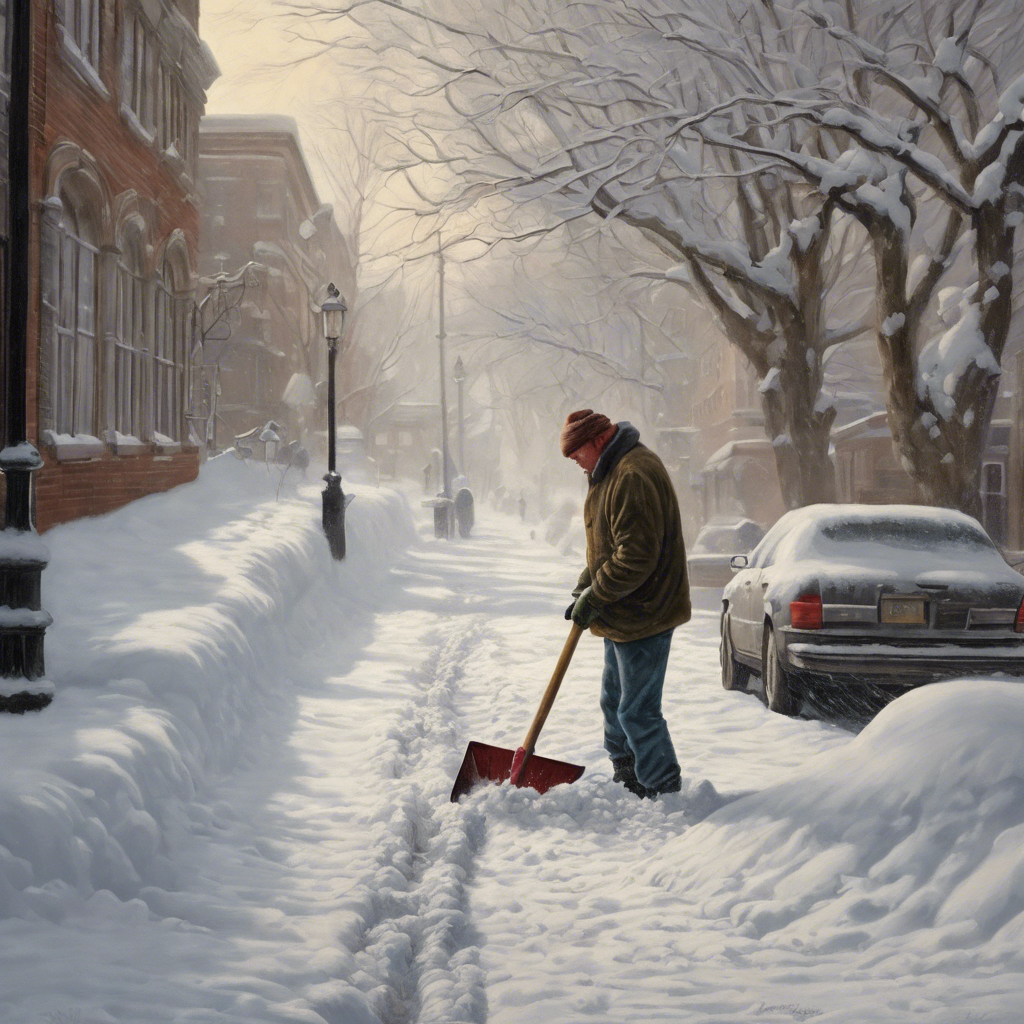
    The Case of Sidewalk Snow Removal

    Published February 23, 2024 · 4 min read

    The Case of Sidewalk Snow Removal
    Watch the vlog on YouTube
  • The Case of the Not-So-Lucky Moose

    Written by Michael Tillmann in An Interesting Case

    This is the interesting case of the Not-So-Lucky Moose – or to use its correct legal name – the case of R. v. Chen et al., which was decided in the Ontario Court of Justice in 2010. It is the story of Jie Chen (also known as David Chen), owner of the Lucky Moose Food Mart in Toronto’s Chinatown, and how he took the law into his own hands to stop a repeat shoplifter, Anthony Bennett by tying him up and holding him until police arrived. His actions would result in him being prosecuted for assault and forcible confinement, and in the federal government of Canada changing the Criminal Code to make it easier for private persons to make citizen’s arrests.

    February 10, 2024 · 6 min read

    The Case of the Not-So-Lucky Moose

    This is the interesting case of the Not-So-Lucky Moose, or to use its correct legal name, the case of R. v. Chen et al.

    The case is named after Mr. Jie Chen (also known as David Chen) and the store he owned, the “Lucky Moose Food Mart” in Toronto. It became a court case because Mr. Chen, and some other staff at his store, were prosecuted for the crimes of assault and forcible confinement due to the actions they took against a Mr. Anthony Bennett, a thief who had been repeatedly stealing goods from the “Lucky Moose.” Frustrated with Mr. Bennett’s thefts, they decided to seize him, tie him up and confine him in a van.

    The case hinged on whether the actions of Mr. Chen and his associates were a legal “citizen’s arrest” under Canadian law or whether they were an unlawful and excessive use of force. The case generated much public attention and controversy, being criticized by many persons as an example of an honest shop owner being persecuted for merely defending his own store against repeated thefts.

    The case was decided by the Ontario Court of Justice in 2010, but the story begins over a year earlier in Toronto’s Chinatown.

    On May 23, 2009, Mr. Jie Chen and his colleagues Mr. Qing Li and Mr. Wang Chen were working at the “Lucky Moose.” Mr. Jie Chen looked at his store’s video surveillance system and observed Mr. Bennett stealing several plants from an outdoor area, placing them on the back of his bicycle and riding away with them. At the time, Mr. Chen was not able to do anything about this, but that changed roughly one hour later when Mr. Bennett returned to the store again.

    As Mr. Bennett returned to the store, Mr. Chen confronted him about the theft and, at some point, Mr. Bennett decided to flee. Mr. Chen and his associates caught up with Mr. Bennett and managed to physically subdue him. They then tied him up with some rope and loaded him into the back of a van.

    Meanwhile, as the conflict between the staff of the “Lucky Moose” and Mr. Bennett was unfolding, persons in the area had observed the altercation and had begun to call 911. The Toronto Police received four 911 calls from persons reporting that a group had been observed beating up an individual and then putting that individual into the back of a white van.

    In response, four police officers were dispatched, and upon arrival, they found the van in question slowly driving away from the scene. Inside were Mr. Jie Chen, his two colleagues and the now captured Mr. Bennett, tied up with rope and laying on the floor in the back.

    The police ordered Mr. Chen and his two associates to get on the ground and detained them so they could investigate the incident. Upon searching the three persons the police found them to be in possession of some boxcutters. The police then made the decision to arrest Mr. Chen and the two others for assault and forcible confinement. Mr. Bennett was also arrested at this point.

    Following the arrests, the Crown Attorney placed in charge of the case made the decision to proceed with charges against Mr. Chen and his two colleagues. Mr. Chen was offered a chance at a plea deal but declined, deciding to take his chances at trial. After consultation with the Crown Attorney, Mr. Bennett agreed to plead guilty to shoplifting and he was sentenced to 30 days in jail for that crime.

    The case came to trial in 2010 and, during the trial, the fate of Mr. Chen and his fellows hung on the answers to two key questions: 1) did the three of them have proper grounds under Section 494 of Canada’s Criminal Code to make a “citizen’s arrest” of Mr. Bennett and 2) did the trio use excessive force when making the “citizen’s arrest”? The Crown Attorney that prosecuted Mr. Chen and the two others argued that they were guilty of crimes for the force they had used against Mr. Bennett because they had no proper authority to make an arrest and, even if they did, they’d used too much force.

    Although most arrests are made by police and other public officials in our modern society, the law has recognized for centuries that private persons do have the power to arrest for crimes in certain circumstances and subject to certain limits. This power of arrest for private persons is commonly known as “citizen’s arrest” and, in Canada, the source of that authority – as well as its limits – can be found in section 494 of the Criminal Code.

    In 2009, section 494 stipulated that – to make a valid “citizen’s arrest” – an individual could only arrest someone for a crime if the criminal was caught in the act of the committing that crime or, at the very least, in the act of fleeing arrest and while being pursued by someone who had lawful authority to arrest. The prosecutor in the case at hand argued that this meant Mr. Chen’s actions could not be a legal arrest because he and his colleagues had captured Mr. Bennett an hour after he had stolen the plants.

    However, luckily for Mr. Chen, the trial judge ruled that Mr. Bennett had been committing a crime when he had been captured and so, despite initial impressions, he had been caught in the act. The judge decided that, when Mr. Bennett returned to the store an hour after first taking the plants, he was still engaged in the crime of theft because he had returned to steal more things. Indeed, Mr. Bennett even admitted as much.

    So, that answered Question #1 in favour of Mr. Chen, but it still left the second issue: Had he used too much force?

    Just because a person is authorized to make an arrest doesn’t mean they can use any force they choose. Both police and private citizens are legally required to keep the amount of force they use within reasonable limits, and they can be held criminally liable for excessive force.

    The prosecution argued that the amount used against Mr. Bennett was far too much. Perhaps the words of Mr. Bennett himself could be used to sum up this point, as – when testifying as a prosecution witness against Mr. Chen – he stated something to the effect of: “Yeah, I stole from them, but they didn’t have to frigging tie me up and throw me into a van. There were three of them, I was going nowhere they could have walked me to the store.”

    Luckily again for Mr. Chen, although the trial judge found that Mr. Chen and his two other associates had credibility problems, the judge couldn’t be sure beyond a reasonable doubt that excessive force had been used. Accordingly, all three were therefore found not guilty.

    As mentioned, the case of Mr. Chen gained a lot of media attention, with many editorials and opinion pieces commenting that he was being treated unfairly. Many persons expressed the opinion that it was understandable that he would take the law into his own hands, especially in view of allegations that Mr. Chen made that he would sometimes wait for up to five hours for police to respond to a report of theft at his store.

    In response to this public outpouring of sympathy for Mr. Chen, the Canadian federal government of the day enacted changes to the Criminal Code in 2012 which made it easier for persons to make “citizen’s arrests.” Section 494 of the Criminal Code would now allow a property owner to arrest someone who commits a crime on or against their property, not only if that person was caught in the act, but also for a “reasonable time” afterwards, as long as it is not feasible for a police officer to make the arrest instead.

    The Lucky Moose case remains important today as a real-world example of how citizen’s arrest powers work under Canadian law, the limits on force, and the balance between private action and criminal liability.

    Bowal, P., Via, I., Beckie, J. (2014, September 5). Whatever Happened to … David Chen and Citizen Arrests. LawNow. https://www.lawnow.org/whatever-happened-david-chen-citizen-arrests/

    Criminal Code, R.S.C. 1985, c C-46. https://laws-lois.justice.gc.ca/eng/acts/c-46/page-86.html#h-126325

    National Post Staff. (2013, March 12). ‘Lucky Moose Bill’ loosens self-defence, citizen’s arrest laws. National Post. https://nationalpost.com/news/toronto/lucky-moose-bill-loosens-self-defence-citizens-arrest-laws

    R. v. Chen et al., 2010 ONCJ 641 (CanLII). https://canlii.ca/t/2f7qc

    Robson, D. (2010, October 28). Grocer thwarts thief on eve of verdict. Toronto Star. https://www.thestar.com/news/gta/grocer-thwarts-thief-on-eve-of-verdict/article_fa1fd53d-75f3-5a90-aa85-8ab14b3a6090.html

  • The Case of Handrail Hostilities

    Written by Michael Tillmann in An Interesting Case

    This is the interesting Case of Handrail Hostilities – or to use its correct legal name – the case of Kosoian v. Société de transport de Montréal, a case decided by the Supreme Court of Canada in 2019. It is the story of Bela Kosoian who was ticketed and arrested in 2009 by Constable Fabio Comacho, a police officer, for allegedly breaking a transit authority bylaw because she refused to hold the handrail of an escalator in a subway station. It is also the story of how she fought her tickets and her arrest all the way to the Supreme Court of Canada.

    February 2, 2024 · 5 min read

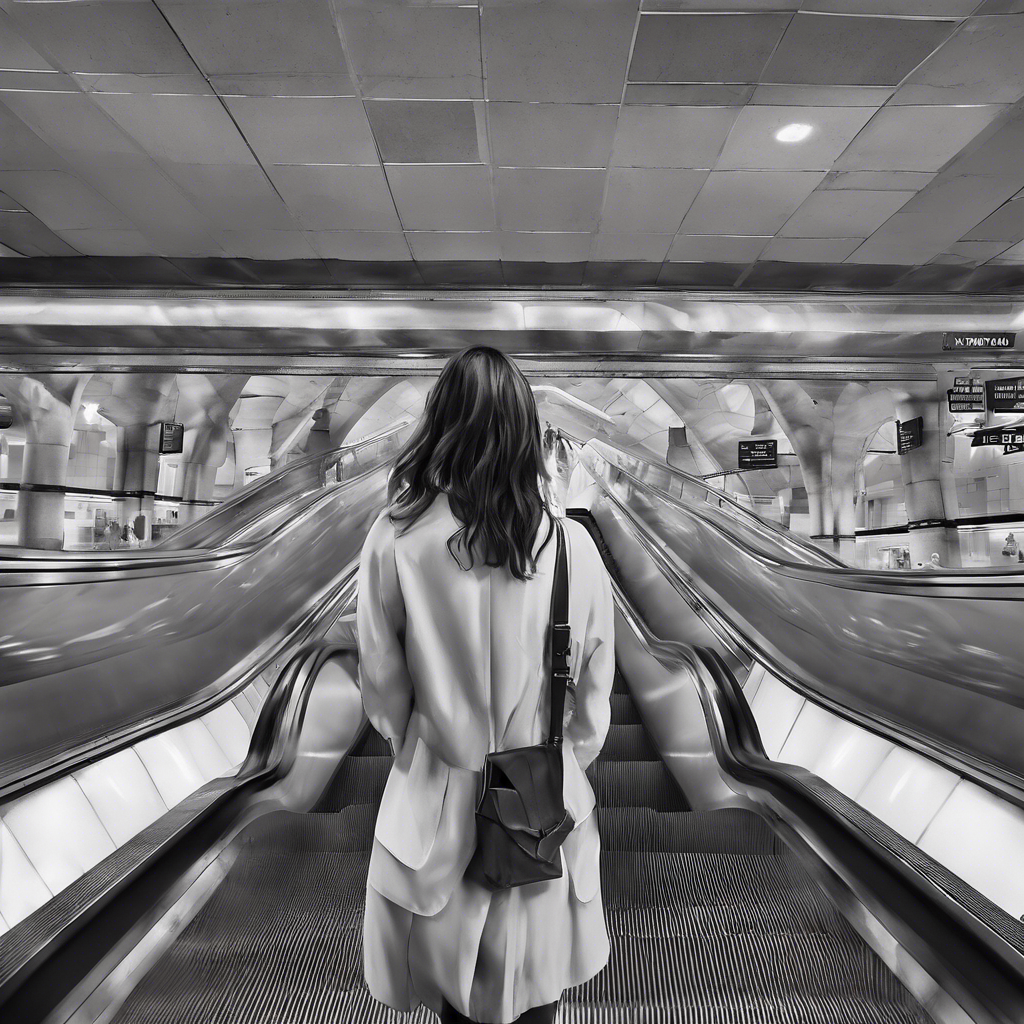
    A woman standing at the bottom of an escalator in a subway station

    This is the interesting case of Kosoian v. Société de transport de Montréal (or STM), a public transit authority that operates a subway in Montreal and its surrounding metropolitan area.  The case was decided by the Supreme Court of Canada in 2019, but the story begins a decade earlier.

    In 2009, Ms. Bela Kosoian decided to take the subway to downtown Montreal.  She entered a subway station, operated by STM, and started down an escalator to get to her train.  Next to the escalator was a sign that displayed the words “caution” and “hold handrail” and displayed a picture of a person holding the handrail.  However, Ms. Kosoian was busy looking in her bag to find money for her subway fare, so she wasn’t holding the handrail.

    A police officer, Constable Fabio Comacho, happened to be on duty that day in the subway station.  He was a city police officer for the municipality of Laval but also held an appointment to act as an inspector for the subway system, in which capacity he enforced the transit authority’s bylaws.  When he saw Ms. Kosoian on the escalator, Constable Comacho asked her to hold the handrail, because he believed that the transit authority bylaws required this.  This was because the direction was displayed on the sign and because STM had given training to the constable, and other officers, that holding the handrail was a legal requirement.

    Ms. Kosoian was not willing to comply with the officer’s request and an argument between her and the officer ensued.  The officer then ordered her to hold the handrail and warned her that, if she did not, he would give her a ticket.  Ms. Kosoian refused to comply with the order as she didn’t believe she had to.  Once she got to the bottom of the escalator, Constable Comacho stopped Ms. Kosoian and asked her to follow him to a nearby holding room, because he intended to write her a ticket.  Ms. Kosoian refused to follow him because she didn’t believe she’d done anything wrong, and she then tried to leave. 

    At this point, Constable Comacho and another officer physically took hold of Ms. Kosoian by her arms and escorted her to the holding room, which had a surveillance camera.  Once in the room, Constable Comacho asked Ms. Kosoian for her ID so he could write up her ticket, but she refused and asked to speak with a lawyer.  The officers then told Ms. Kosoian that she was under arrest and began to search her bag to find her ID.  When she objected to the search, the officers handcuffed Ms. Kosoian and forced her to sit on a chair with her hands behind her back.

    After finding Ms. Kosoian’s ID in her bag, the officers then issued her with two tickets: a $100 ticket for not holding the handrail and a $320 ticket for hindering an inspector in the performance of their duties.  The handcuffs were then removed, and she was permitted to leave.

    The day following the arrest, Ms. Kosoian’s husband contacted STM and filed a complaint about her treatment.  He also formally requested that the video surveillance tapes of the holding room be given to him.  However, STM did not respond to this request and the tapes ended up being automatically erased after 5 days.

    Also, in the days following the arrest, Ms. Kosoian sought medical treatment and it was here that a doctor diagnosed her with post traumatic stress from the incident, as well as a sprained wrist.

    In 2012, Ms. Kosoian went to trial in Municipal Court for her two tickets.  The judge decided that he was not convinced beyond reasonable doubt that she had violated a bylaw, and so Ms. Kosoian was found not guilty, and the tickets thrown out.

    After her tickets were thrown out at trial, Ms. Kosoian commenced a lawsuit against Constable Comacho and STM for the 2009 incident, arguing that the officer had acted unlawfully and asking for $69,000.00 in damages.  When the suit went to trial in the Court of Quebec, the judge ruled against Ms. Kosoian, finding that the officers had been acting reasonably and lawfully.  Indeed, the judge said that Ms. Kosoian was the one who had been acting unreasonably for her failure to cooperate with the officer’s instructions.

    Ms. Kosoian’s appealed this decision to a higher court, the Quebec Court of Appeal, but the majority of the court (two of the three judges) also ruled against her.  Among other things, the majority ruled that Constable Comacho had been acting reasonably, because he believed that holding the handrail was a legal requirement and had been taught this in his training.  Like the trial judge, they also stated that Ms. Kosoian had been unreasonable in refusing to comply with the officer’s instructions.

    Ms. Kosoian appealed again, and the case then went to the Supreme Court of Canada.  In the Supreme Court, the nine justices unanimously agreed to overturn the decisions of the two lower courts.  They ruled that Constable Comacho had acted unlawfully and unreasonably.  They found that not all signs posted in the subway were legally enforceable, and this included the sign that directed persons to hold the escalator railings. 

    The Supreme Court found that some signs were legally enforceable because they were based on actual bylaws, but other signs – like the one about holding the escalator railing – were only warnings, not legal requirements.  The officer had misunderstood the law and had thought something was a bylaw violation when it really was not.  He had given out a ticket for a bylaw violation that did not actually exist.

    In addition, since the officer had given out a ticket for this non-existent offence not only was the ticket invalid, but so was the arrest.  After all, Constable Comacho’s purpose in arresting Ms. Kosoian was to identify her so he could issue the ticket, because she had refused to cooperate and voluntarily identify herself.  But if the ticket was for an offence that didn’t exist, well that meant he was arresting her for nothing, and the arrest was unlawful.  Although it might have been impolite for Ms. Kosoian to refuse to identify herself and to walk off when the officer was trying to write the ticket, she had no legal obligation to cooperate since the ticket was for an offence that did not actually exist.

    Further, the Supreme Court ruled that, just because a police officer was told that something was the law in their training, they are not necessarily entitled to rely on that if it turns out their training was wrong.  An officer’s training can be considered when deciding whether an officer acted reasonably, but officers are still expected to use their own judgment.   In the words of the Supreme Court, “they must be able to exercise judgment with respect to the applicable law and cannot rely blindly on the training and instructions received.”

    For the harm that Ms. Kosoian suffered due to her unlawful arrest, the Supreme Court awarded her $20,000 in damages.

    SOURCES:

    1.        Case in Brief: Kosoian v. Société de transport de Montréal. (2019, November 29). Supreme Court of Canada Website. https://www.scc-csc.ca/case-dossier/cb/2019/38012-eng.aspx. Retrieved on February 1, 2024.

    2.        Full Supreme Court Judgment: Kosoian v. Société de transport de Montréal. (2019, November 29). Supreme Court of Canada Website. https://decisions.scc-csc.ca/scc-csc/scc-csc/en/item/18050/index.do. Retrieved on February 1, 2024.